 MAGNA BUREAU
The Wire
Ukrainians Lash Out at Trump as Zelenskyy Warns of US Betrayal
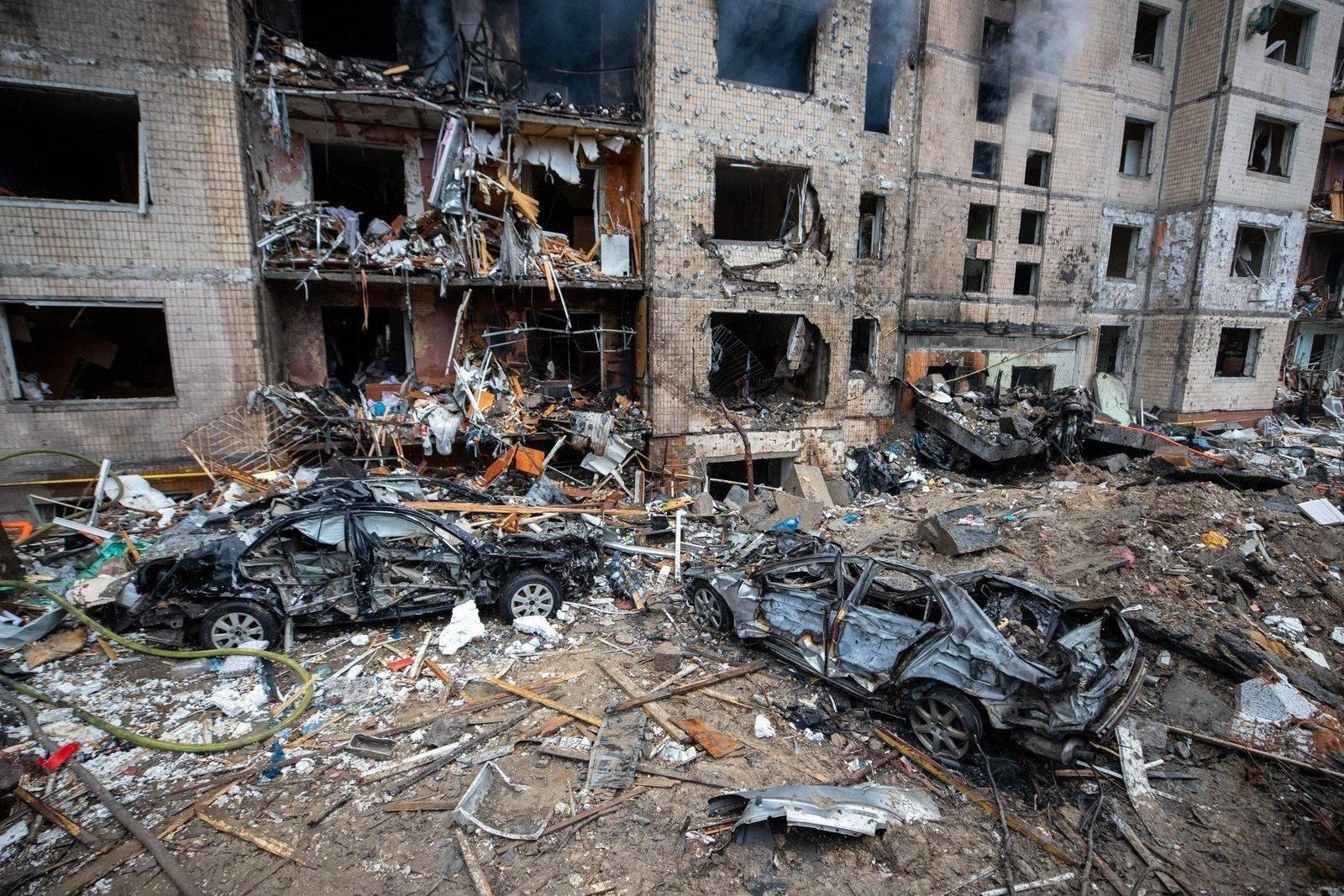
As Russian strikes devastated residential buildings in Kyiv, Ukrainians accused Washington of gambling with their lives. Zelenskyy said Trump “isn’t on the right side of history” after the diesel deal with Moscow; and said bluntly that he felt betrayed.
Key points
- Ukrainians accused the United States of gambling with their lives as Russian strikes devastated residential buildings in Kyiv, and President Zelenskyy said Donald Trump “isn’t on the right side of history” as Washington struck a diesel deal with Moscow. Al Jazeera
- Asked in an interview whether he felt betrayed by Trump’s decisions of recent days, Zelenskyy answered: “Really, yes.” He called the US-Russia diesel agreement “weak” and said “it’s painful.” NY Post
- Zelenskyy said Kyiv’s access to the military version of Elon Musk’s Starlink system, Starshield, was limited without warning, interrupting combat drone operations during fresh Russian attacks on civilian targets. Ukrainian officials
- “This decision will bring a lot of human losses... Of course, people will die,” Zelenskyy said of the Starshield restrictions. Musk replied that Starshield is owned and controlled by the US government: “Any limits on speed or usage are decided by the US military and ultimately Potus.” NY Post / Musk on X
- Trump hit back at Zelenskyy’s criticism of the diesel purchase by saying it was “time for Ukraine to get a new president,” bringing relations between Washington and Kyiv to their lowest point since the Oval Office confrontation in February. The Times
ONE EVENT. THREE READINGS.
The alliance under strain.
Western coverage frames the breach as a crisis of alliance management.
What this reading highlights: The story is told through the instruments of the rupture: the diesel deal announced on a Friday, the energy ceasefire declared on a Sunday, the…
The Russian lens: proof the Americans are coming around.
Moscow’s reading of the breach is satisfaction barely concealed.
What this reading highlights: In the Russian telling, the diesel deal and the pressure on Kyiv are evidence that Washington is finally behaving “realistically”; treating Ukraine as a…
Small countries are watching.
From the Global South, the breach reads as a cautionary tale about depending on a great power.
What this reading highlights: The lesson being drawn in capitals from Jakarta to Abuja is not about Ukraine’s battlefield choices but about the terms of American partnership: 1,695 days…
Sources by lens: 0 West, 0 East, 0 Global South. See every source
THE POINT OF CONVERGENCE
On October 15, 2026, Ukrainians publicly accused the United States of gambling with their lives as Russian strikes devastated residential buildings in Kyiv, and Zelenskyy said Trump “isn’t on the right side of history” after the US-Russia diesel deal; answering “Really, yes” when asked if he felt betrayed.
WHAT REMAINS CONTESTED
Whether the Starshield restrictions were a deliberate American decision or a technical fault; Musk says any limits are decided by the US military and “ultimately Potus,” while Zelenskyy allowed it could be “a huge technical problem” and asked for the system to be switched back on.
The story
Grief in Kyiv, anger at Washington
On Wednesday night and into Thursday, Russian ballistic missiles struck Kyiv for the second consecutive night, and this time the air raid sirens failed to sound in time to warn people to take cover. Rescue workers operated through the night at residential buildings hit across the capital: two people died in a strike on a multi-storey building in the Desnianskyi district, one more was killed in Golosiivsky, and across the Dnipropetrovsk region another two were killed and six wounded. A sixth body was recovered in the southeastern Zaporizhzhia region. In the capital, a mother held her daughter in front of a shattered apartment block on Tuesday; an image that has travelled the world.
And in living rooms and on street corners across Ukraine, the anger was not aimed only at Moscow. Ukrainians accused the United States of gambling with their lives, as their president said publicly that Donald Trump “isn’t on the right side of history” after Washington struck a diesel deal with Vladimir Putin. Asked in an interview whether he felt betrayed by Trump’s decisions of recent days, Volodymyr Zelenskyy did not hedge. “Really, yes,” he said. The words mark the lowest point in US-Ukraine relations since the disastrous televised confrontation in the Oval Office last February.
What did Zelenskyy actually say?
The interview was unsparing. Zelenskyy said he felt betrayed by Trump’s announcement of an energy ceasefire and diesel deal with Putin last week. “Our country has to survive, and we count on our real partners, strategic partners, the United States and President Trump. They wanted us not to attack. My opinion was, it is not fair, an energy ceasefire is okay, it’s understandable,” he said. “It’s the worst version of peace. But anyway, it’s some step to peace... of course, we support it because we need our people to live, to go through this winter and to stop the war.” Then the turn: “But he said about energy ceasefire and we didn’t attack during three days; any kind of energy objects. We didn’t, not just attack, we didn’t respond... They attacked us, our gas stations, infrastructure, etc.”
He called the diesel deal “weak” and said “it’s painful.” On Musk’s reported restriction of Starshield, the military-grade version of Starlink Kyiv uses for battlefield operations and drone guidance, he was blunt: “It’s a big mistake... This decision will bring a lot of human losses... Of course, people will die.” He added: “I hope that it’s a mistake, maybe a huge technical problem... But we are asking to do it, to switch it on.” Asked if he was angry with Musk: “Yes, I think he is not right.”
The Starlink limits are disputed in origin but not in effect. Zelenskyy adviser Serhii Beskrestnov said speeds on Starshield terminals guiding drones in motion had been restricted to 100 mph, making them ineffective. Musk replied on X that Starshield “are owned and controlled by the US government” and that “any limits on speed or usage are decided by the US military and ultimately Potus [Trump].” In other words: the decision, if it happened, came from Washington; and Kyiv says it hit without warning, mid-barrage.
isn’t on the right side of history
The gaps in the picture
Whether the Starshield restriction was a deliberate American decision, a technical fault, or something in between is still unresolved; Zelenskyy himself allowed that it could be “a huge technical problem,” even as Musk pointed to the US military chain of command. The exact civilian death toll from this week’s strikes may still rise, as rescue teams warned recovery operations were continuing. It is not known whether Washington will answer Kyiv’s request to restore the system, or whether the diesel deal includes any security assurances for Ukraine at all. And the deepest unknown is the one Zelenskyy named himself: whether America, “our real partners, strategic partners”, is still standing on Ukraine’s side, or whether the deal with Putin marks a turn from ally to broker.
Why does a public breach between Kyiv and Washington matter?
Because Ukraine’s war effort runs on American systems. US intelligence cues Ukraine’s air defences; American satellite and communications infrastructure guides its drones; Patriot batteries and their interceptors are the shield over Kyiv. When Zelenskyy says the intelligence-sharing gap is “dangerous,” he is describing a dependency, not a preference. A rupture at the top, Trump telling Kyiv it is “time for Ukraine to get a new president,” Musk amplifying that it is “time for Zelensky to go”, signals to Moscow that the alliance has a price, and to every other American ally that guarantees are negotiable. Russia reads these signals the way Zelenskyy says it does: he posted on Thursday that it was “obvious that Russia deliberately escalated these strikes after receiving a relaxation of sanctions and seeing attempts to pressure Ukraine.”
The second reason is the precedent. The United States has spent 1,695 days, Zelenskyy’s count, arming Ukraine to resist invasion. A diesel deal that pays the invader while the invaded is told to stop shooting rewrites the moral ledger of that commitment in real time. The strikes on Kyiv’s residential districts are the human ledger against which every diplomatic manoeuvre will now be measured.
Magna analysis: the betrayal is structural, not personal
Strip away the personalities, Trump, Zelenskyy, Musk, and what remains is a structural collision. The United States has two interests in this war that are now in open conflict: sustaining Ukraine as a bulwark against Russian expansion, and insulating the American consumer from the war’s energy costs. For 1,695 days those interests pointed the same way; in October 2026 they diverged, and the divergence has a name: diesel. The “betrayal” Zelenskyy names is not a broken promise so much as a revealed hierarchy; when fuel prices and midterms sit on one side of the scale and a partner’s survival on the other, the scale tips.
Second-order consequences The first consequence is already visible on the
The first consequence is already visible on the battlefield: Ukrainian drone operations degraded at the exact moment Russia escalated its strikes, a combination Kyiv’s officials describe in terms of lives lost. The second runs through the alliance system: every American security partner is now pricing the risk that wartime support can be conditioned on the patron’s domestic politics; a discount rate applied to every future guarantee. The third runs through the sanctions regime: a diesel deal that pays Moscow, paired with talk of further sanctions relief, tells the Kremlin that escalation is met with commerce, not cost. And the fourth runs through American politics itself: if the fuel deal fails to move pump prices before the midterms while images of shattered Kyiv apartment blocks dominate the news, the administration may discover that the price of cheap diesel was paid in the currency it can least afford.
What to watch
First, Starshield: whether the system is restored, and whether Washington admits the restriction was its decision, Musk has already pointed at the chain of command. Second, the diesel cargoes: their arrival before the midterms will determine the domestic verdict on the deal. Third, Zelenskyy’s diplomacy: he was meeting Andy Burnham in London on Thursday, and his next moves, toward European capitals, toward Congress, toward the American public; will show whether he can rebuild a coalition past the White House. Fourth, Russia’s winter campaign: the strikes on Kyiv’s residential districts are the opening of a season, not an episode. And finally, the peace talks themselves; if the American “vigorous efforts” the Kremlin praises produce a table, the question of who sits at it, and on whose terms, will answer Zelenskyy’s question about betrayal more definitively than any interview.
What we agree on, and what remains open
Established
- On October 15, 2026, Ukrainians publicly accused the United States of gambling with their lives as Russian strikes devastated residential buildings in Kyiv, and Zelenskyy said Trump “isn’t on the right side of history” after the US-Russia diesel deal; answering “Really, yes” when asked if he felt betrayed.
Contested
- Whether the Starshield restrictions were a deliberate American decision or a technical fault; Musk says any limits are decided by the US military and “ultimately Potus,” while Zelenskyy allowed it could be “a huge technical problem” and asked for the system to be switched back on.
Still open
- Whether Washington will restore Starshield, whether the diesel deal carries any security assurances for Ukraine, or whether the breach marks a tactical pressure campaign or a structural American pivot from ally to broker.
What to watch
Questions, answered
Because Russian ballistic missiles struck Kyiv’s residential buildings for two nights while, Ukrainians say, American decisions degraded their defences: the US-Russia diesel deal paid Moscow, an energy ceasefire asked Kyiv to stop shooting, and Starshield satellite restrictions, blamed by Musk on the US military chain of command, hit drone and air-defence operations mid-barrage. Civilians died in Desnianskyi, Golosiivsky, Dnipropetrovsk and Zaporizhzhia.
Asked in an interview whether he felt betrayed by Trump’s decisions of recent days, Zelenskyy answered: “Really, yes.” He called the US-Russia diesel deal “weak” and said “it’s painful.” His point was structural: Ukraine paused its refinery strikes for three days under the American truce while Russia kept hitting Ukrainian energy, and Kyiv’s lifeline, intelligence, satellite systems, air defence, runs on American decisions.
Ukrainian officials said Kyiv’s access to Starshield, the military version of Musk’s Starlink used for battlefield operations and drone guidance, was limited without warning; speeds on terminals guiding drones were restricted to 100 mph, making them ineffective. Musk replied that Starshield is owned and controlled by the US government and that “any limits on speed or usage are decided by the US military and ultimately Potus [Trump].”
Trump hit back at Zelenskyy’s criticism of the diesel purchase by saying it was “time for Ukraine to get a new president”; bringing US-Ukraine relations to their lowest point since the televised Oval Office confrontation last February. Musk amplified the message, posting that it was “time for Zelensky to go.” Zelenskyy answered that Ukraine “can’t be weak, otherwise we can’t survive” and “we are not selling our country.”
Watch whether Starshield is restored and whether Washington owns the decision; whether the first Russian diesel cargoes arrive before the midterms; and where Zelenskyy turns next; he was in London meeting Andy Burnham on Thursday, and his appeal was aimed past the White House at the American public and Congress. The deeper question is whether this is pressure tactics to force a settlement or a structural pivot from ally to broker.