 MAGNA BUREAU
The Wire
Trump rebuilds the tariff wall: 14 economies face new duties over “excess capacity”
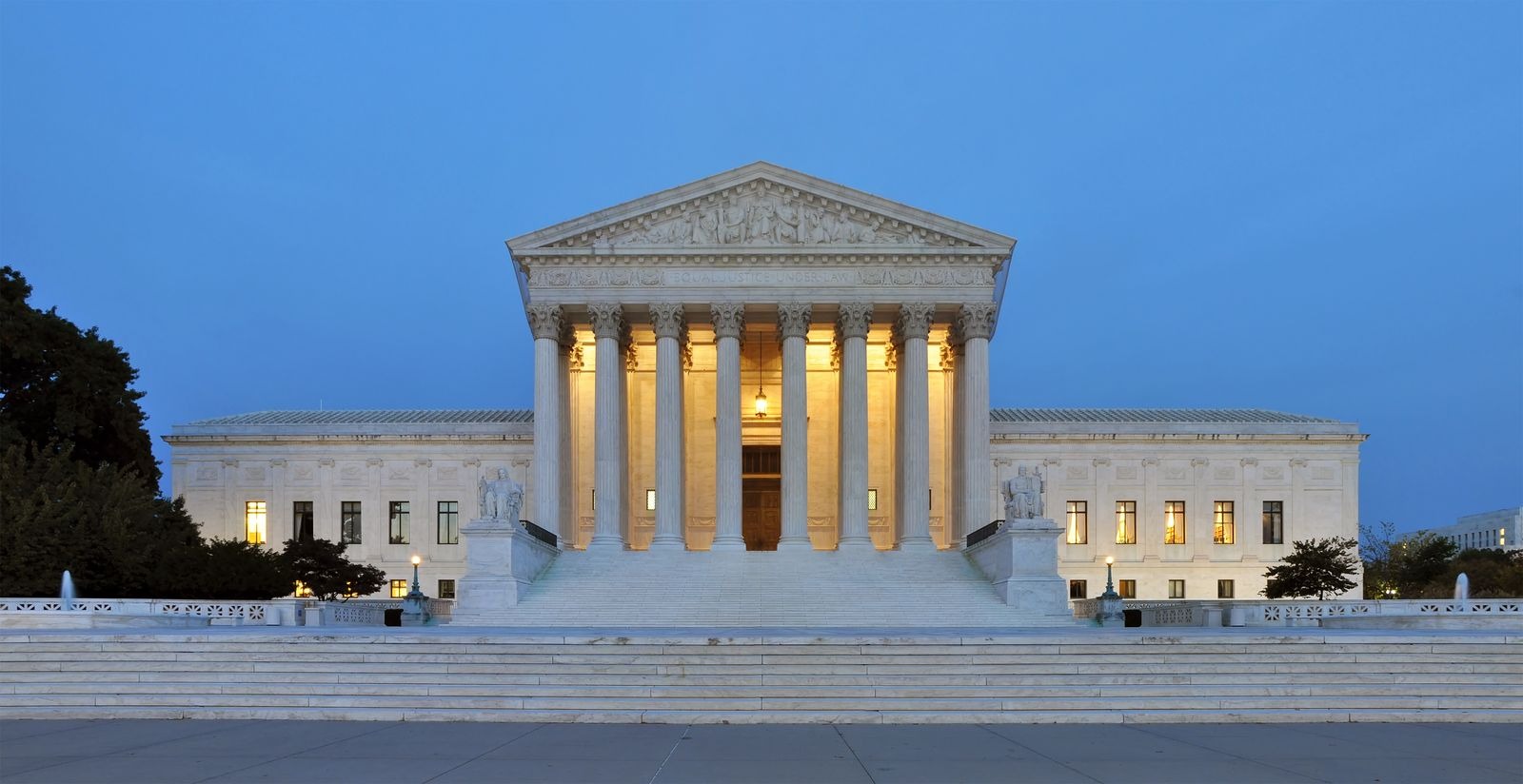
The US Trade Representative has proposed new tariffs on 14 trading partners, including China, the European Union, India and Japan, after an eight-month inquiry into what Washington calls “structural excess capacity”, rebuilding the tariff wall the Supreme Court struck down in February.
Key points
- The Office of the US Trade Representative announced on Wednesday 25 November 2026 that it had determined 14 economies engage in practices that create “structural excess capacity” in manufacturing, and proposed new tariffs under Section 301 of the Trade Act of 1974. 2
- China faces the highest proposed rate: a 20 percent excess-capacity tariff on top of roughly 25 percent in duties imposed during President Donald Trump’s first term, capped at 20 percent under a US-China trade truce that expires on 10 January 2027. 1
- The 14 economies are China, Bangladesh, Cambodia, the European Union, India, Indonesia, Japan, South Korea, Malaysia, Singapore, Switzerland, Taiwan, Thailand and Vietnam; Mexico and Norway, also investigated, were spared for now. 1
- The proposed duties will be published in the Federal Register, with written comments due by 5 January 2027 and public hearings scheduled for 25 January 2027; implementation could slip into January. 2
- Beijing rejected the accusation, with foreign ministry spokesman Guo Jiakun calling “overcapacity” a “false issue” and warning that tariff wars benefit no one. 4
ONE EVENT. THREE READINGS.
West.
Coverage in the United States and Europe has centred on the legal rebuild and the midterm politics.
What this reading highlights: Reuters, which broke the details through a senior US official, framed the move as the administration’s latest attempt to restore duties the Supreme Court struck down; Le Monde stressed that the measures land despite the electoral setback.
The expert voice most quoted, trade lawyer Dmitry Grozoubinski, warned that Section 301 was “supposed to be a scalpel, and they used it like a flamethrower”; designed to hit one country over one industry, not to set the tariff code for almost every import.
Sources: Reuters (1), Office of the US Trade Representative (1), Le Monde (1)
East.
Asian coverage has led with Beijing’s rejection and the exposure of the region’s exporters.
What this reading highlights: CNA of Singapore reported the caps in detail and noted that Washington accuses Chinese firms of investing in Vietnam, Indonesia and Cambodia to bypass earlier tariffs; China Daily called the “overcapacity” argument political manipulation.
South Korea’s business press underlined the stakes for Seoul’s battery and chip exporters. Beijing stopped short of threatening retaliation, urging dialogue; but the truce that caps China’s rate expires on 10 January, and the deadline now dominates the relationship.
Sources: CNA (2), China Daily (1)
South.
For the Global South, the story is about the factory floor.
What this reading highlights: Al Jazeera’s explainer led with the 14-country list and the history of the tariffs the Supreme Court struck down; India’s Business Standard spelled out what New Delhi faces, 17 percent with a deal, 25 percent without, while the Daily Star of Bangladesh noted its own country’s place on the list.
Bangladesh, Cambodia, Vietnam, Indonesia and Thailand, which built their growth on exports to American consumers, now face levies they did little to cause and have the least leverage to negotiate away.
Sources: Al Jazeera (1), Business Standard (1), The Daily Star (1)
Sources by lens: 3 West, 3 East, 3 Global South. See every source
THE POINT OF CONVERGENCE
On Wednesday 25 November 2026, the US Trade Representative proposed new tariffs on 14 economies after an eight-month Section 301 investigation into “structural excess capacity”, with China facing the highest rate, Mexico and Norway spared for now, and a public comment period running until 5 January 2027 ahead of hearings on 25 January.
WHAT REMAINS CONTESTED
On whether “excess capacity” is a real economic problem or a political pretext, Washington says subsidies let foreign factories flood world markets, Beijing calls it a “false issue” and political manipulation, and on whether the tariffs will rebuild American manufacturing or simply raise prices for American households and small businesses.
The story
A Wednesday announcement, eight months in the making
The United States proposed a new round of tariffs on Wednesday 25 November 2026, targeting 14 of its largest trading partners in a move that rebuilds the tariff wall the Supreme Court struck down in February. The Office of the US Trade Representative (USTR), led by Jamieson Greer, said it had determined that the 14 economies engage in acts, policies and practices that create what Washington calls “structural excess capacity” in manufacturing; production, it says, propped up by subsidies and divorced from market demand.
The announcement follows an eight-month investigation opened on 11 March 2026 under Section 301 of the Trade Act of 1974, a law that lets Washington penalise countries it finds treat American businesses unfairly. China, the European Union, India and Japan are among those named. Mexico and Norway, which were also investigated, were spared for now. The duties are proposals, not yet in force: they must be published in the Federal Register and pass through public comment and hearings before they can take effect.
What do the USTR findings actually establish?
The investigation covered 16 economies and 21 manufacturing sectors, from steel and cars to computer chips and solar panels, examining government subsidies, state-suppressed wages and the operations of state-owned companies. Washington’s case is that this support lets foreign factories sell goods more cheaply around the world, undercutting American manufacturers and discouraging investment in the United States. The USTR concluded that each of the 14 targeted economies “creates, sustains, or contributes to structural excess capacity” in ways that burden or restrict US commerce.
China faces the highest rates. Its proposed 20 percent excess-capacity tariff would come on top of roughly 25 percent in duties imposed during Mr Trump’s first term. The rate stays within the 20 percent cap agreed under the US-China trade truce, which expires on 10 January 2027; but if the truce unravels, the rate would rise to 40 percent. Vietnam faces a capped rate of 20 percent if it reaches a trade agreement with Washington, and up to 35 percent if negotiations fail. The European Union, Japan, South Korea and Taiwan are capped at 15 percent, while Cambodia, Indonesia, Malaysia, Thailand and Bangladesh face proposed caps of 18 percent. India, which has no signed trade deal with Washington, would face 17 percent if a pact is finalised, and up to 25 percent if it is not.
Two limits matter. The new duties will not stack on top of the 10 and 12.5 percent tariffs imposed in July on 60 economies over forced-labour enforcement, and they will not exceed the ceilings in trade deals the administration has already negotiated. In a separate action, the USTR also proposed a 10 percent tariff on finished Brazilian aircraft and higher out-of-quota duties on Brazilian sugar.
structural excess capacity.
What has Washington not yet said?
The full product lists and the exact rates for most of the 14 economies have not yet been published; they await the Federal Register notice. It is not yet clear which goods will be exempted, how the caps will interact with existing Section 232 duties on steel, aluminium and cars, or how much of the new burden will reach American consumers as higher prices.
Nor is it clear whether the targeted economies will strike deals in time to lower their caps, whether Beijing will retaliate, or whether the US-China truce survives past 10 January. And the courts have not yet spoken: the new duties will almost certainly be challenged, as the July forced-labour tariffs already are at the US Court of International Trade.
Why does a new tariff round matter now?
The timing is political. The proposal comes weeks after midterm elections in which Mr Trump’s Republican Party suffered heavy losses, with the cost of living and tariffs among the main issues. A Reuters/Ipsos poll after the vote found 62 percent of respondents would support efforts to scrap trade tariffs. Days after the vote, Mr Trump named his longtime adviser Stephen Miller, a hardline voice on immigration, as White House chief of staff; read by analysts as a signal that he intends to double down rather than pull back.
The economics reach further than the politics. The 14 economies supply most of what the United States imports, and the list includes close allies, the European Union, Japan and South Korea, as well as the factory floors of South-East Asia. US stock markets fell on the news on Wednesday, with major indexes down more than 1 percent and the Nasdaq down more than 3 percent amid a sell-off in technology shares. For the rest of the world, the question is whether the world’s largest economy is rebuilding a tariff wall that will stay up for years.
How durable is a tariff wall built on Section 301?
Section 301 is a sturdier foundation than the emergency-powers law the Supreme Court rejected in February. It requires an investigation, published findings and a chance for the other side to be heard, and the duties Mr Trump imposed on China under it in his first term survived court challenges. That is the point. The administration’s own logic, as trade experts read it, is to build a fallback: if the July forced-labour tariffs are struck down at the Court of International Trade, the excess-capacity duties are already in place to replace them, “the tariffs that replaced the tariffs that replaced the tariffs”, as one analyst put it.
But durability is not the same as wisdom. Section 301 was written for targeted retaliation, and stretching it across 14 economies and almost every import invites the very legal challenge it is meant to survive. The caps negotiated in trade deals also blunt the weapon: the European Union, Japan and South Korea are held at 15 percent, and China at 20 percent while the truce holds. The real determinant may not be the statute but the deals; and the diplomacy around them, with G20 leaders due in Miami on 14 and 15 December and the truce expiring a month later.
The second-order effects reach far beyond the docks
The first to feel the duties will be American importers and consumers. Tariffs are taxes paid at the border, and the last two years have shown how quickly they feed into prices; the very cost-of-living pressure that hurt Republicans at the midterms. Small businesses, which lack the scale to absorb or reroute supply, are the most exposed.
The second effect is rerouting. Washington already accuses Chinese companies of investing in Vietnam, Indonesia and Cambodia to bypass earlier tariffs; new duties on those countries close one door and open the question of where production goes next. The third is retaliation and drift: targeted economies may answer with their own duties, challenge the measures at the World Trade Organization, or simply wait out the January hearings, when importers and foreign governments will lobby to narrow the lists.
What to watch before the January hearings?
The calendar is now the story. Written comments are due by 5 January 2027 and the USTR will hold hearings on 25 January, with final action possible soon after. Before that, the US-China truce expires on 10 January, G20 leaders meet in Miami on 14 and 15 December, and India and Vietnam will push to finalise trade deals that lower their caps. The Federal Register notice will show the exact rates and product lists; and the courts, already hearing challenges to the July tariffs, will be watching what Washington publishes.
What we agree on, and what remains open
Established
- On Wednesday 25 November 2026, the US Trade Representative proposed new tariffs on 14 economies after an eight-month Section 301 investigation into “structural excess capacity”, with China facing the highest rate, Mexico and Norway spared for now, and a public comment period running until 5 January 2027 ahead of hearings on 25 January.
Contested
- On whether “excess capacity” is a real economic problem or a political pretext, Washington says subsidies let foreign factories flood world markets, Beijing calls it a “false issue” and political manipulation, and on whether the tariffs will rebuild American manufacturing or simply raise prices for American households and small businesses.
Still open
- The exact rates for most of the 14 economies, which await publication in the Federal Register.
- Whether the US-China truce survives its 10 January expiry.
- Whether India and Vietnam finalise trade deals that would lower their caps.
- Or whether the courts will uphold duties built on Section 301.
What to watch
Questions, answered
Section 301 of the Trade Act of 1974 lets Washington penalise countries it finds treat US businesses unfairly, after an investigation. Trump used it against China in his first term, and those duties survived court challenges. The administration turned to it after the Supreme Court struck down its emergency-powers tariffs in February 2026, because Section 301 rests on a formal investigation and findings, making it harder to overturn in court.
The proposed duties cover China, Bangladesh, Cambodia, the European Union, India, Indonesia, Japan, South Korea, Malaysia, Singapore, Switzerland, Taiwan, Thailand and Vietnam. China faces the highest rate, 20 percent on top of roughly 25 percent from Trump’s first term, rising to 40 percent if the US-China truce collapses. The European Union, Japan and South Korea are capped at 15 percent; Vietnam faces 20 percent with a deal, or 35 percent without one.
Not immediately. The proposals must first be published in the Federal Register, then go through a public notice and comment period, with written comments due by 5 January 2027 and hearings on 25 January. A senior US official said implementation could slip into January. The timetable also depends on the US-China trade truce, which expires on 10 January, and on whether the targeted economies reach trade deals with Washington first.
Beijing argues its exports are simply competitive, not the product of subsidies designed to flood foreign markets. Foreign ministry spokesman Guo Jiakun said tariff wars and trade wars benefit no one, and urged Washington to settle differences through dialogue. China points to the trade truce agreed by Presidents Trump and Xi Jinping, and says both sides should implement the consensus their leaders reached rather than impose new duties.