 MAGNA BUREAU
The Wire
Tanker Catches Fire Off Romania’s Coast as Black Sea Shipping Attacks Escalate
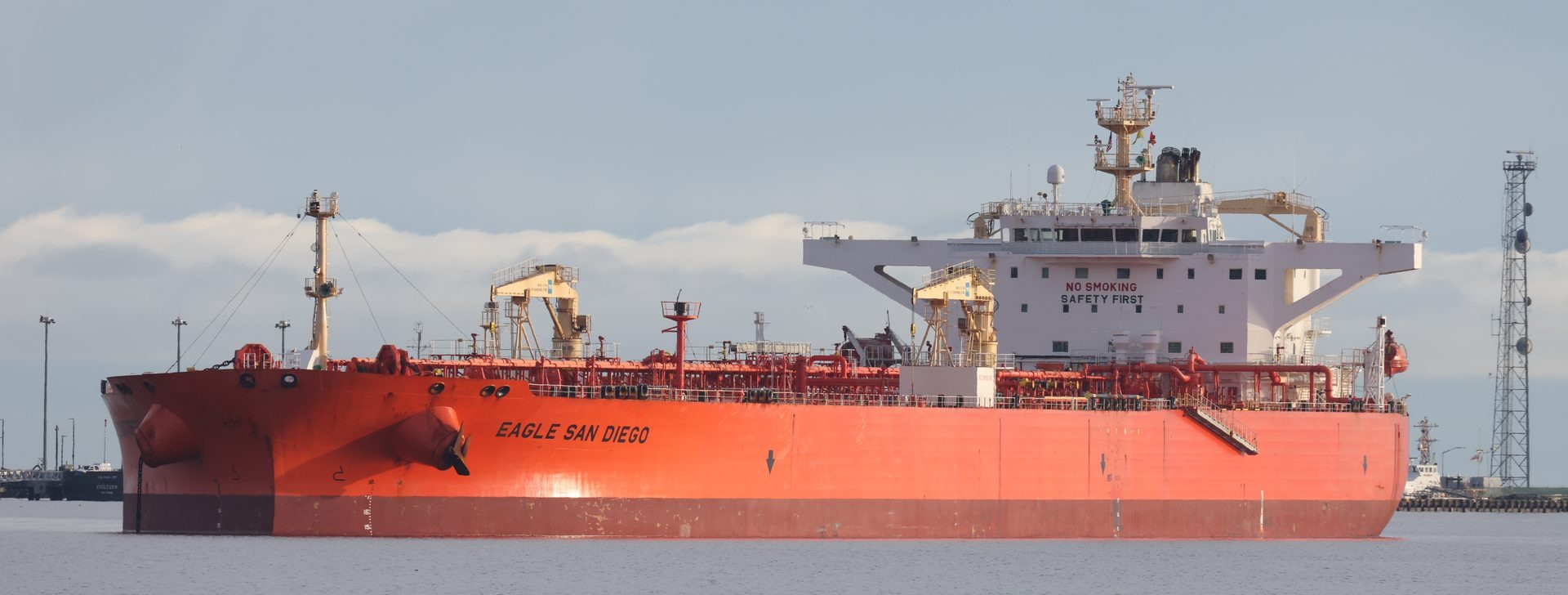
The Comoros-flagged tanker Yara J caught fire after an explosion in Romanian territorial waters near the Sulina canal on October 14, 2026; all 17 crew are safe. It is the fifth merchant vessel struck in the northwestern Black Sea since early October, with roughly 23 sailors dead or missing.
Key points
- The Comoros-flagged chemical and oil tanker Yara J caught fire late on October 14, 2026, while anchored 8–10 nautical miles southeast of the Sulina canal, inside Romanian territorial waters. Al Jazeera
- The Romanian Naval Authority was notified at about 8:00 p.m. after the captain reported a fire following an explosion; the 17-member crew extinguished the blaze themselves, with no injuries reported. Al Jazeera
- Romania’s coast guard clarified the vessel was in ballast (unladen), contradicting initial reports that it carried petroleum products or coal bound for Ukraine. Romanian coast guard
- Defence Minister Radu Miruta said it was unclear whether a drone had struck the ship; the matter is under investigation, though radar detected no drone headed for the vessel. Romanian defence ministry
- Since early October, at least five commercial ships have been struck off Romania and Bulgaria, with roughly 23 sailors killed or missing; on October 13, two ships were hit off Bulgaria and one sank. Regional reporting
ONE EVENT. THREE READINGS.
A NATO front line under gray-zone pressure.
Western outlets read the incident through the alliance-security lens.
What this reading highlights: The facts they foreground: repeated drone breaches of Romanian airspace, scrambled jets from two NATO members on the same day as the fire, and a…
Scepticism toward attribution.
Eastern outlets treat the claims of Russian responsibility with open scepticism.
What this reading highlights: They stress what has been admitted: Bucharest’s own radar recorded no drone approaching the Yara J; Prime Minister Radev conceded there was no clear evidence…
The sailors and the cargoes.
Southern outlets focus on the human ledger and the trade ledger.
What this reading highlights: The crews are the story: Syrians, Indians, Iranians; working-class seafarers from the Global South doing dangerous work for modest wages, now facing drone attacks…
Sources by lens: 0 West, 0 East, 0 Global South. See every source
THE POINT OF CONVERGENCE
A fire broke out aboard the Comoros-flagged tanker Yara J on October 14, 2026, in Romanian territorial waters near the Sulina canal.
WHAT REMAINS CONTESTED
Whether the fire was caused by a drone strike, a mine or an onboard accident, and who is behind the wider string of attacks on merchant ships off Romania and Bulgaria this month; Bucharest says its radar saw no drone, Sofia says the culprit is unproven, Kyiv blames Russia.
The story
Fire aboard a tanker inside Romanian waters
The Comoros-flagged chemical and oil products tanker Yara J caught fire late on Wednesday, October 14, 2026, while at anchor eight to ten nautical miles southeast of the Sulina canal, inside Romanian territorial waters in the Black Sea. The Romanian Naval Authority was notified at about 8:00 p.m. local time, after the ship’s captain alerted authorities that a fire had broken out following an explosion aboard the vessel.
The 17-member crew, Syrian, Indian and Iranian nationals according to maritime tracking data, though some reports described only Syrian and Indian sailors, escaped unhurt. Romanian maritime authorities said the crew extinguished the fire themselves, and no injuries were reported. Romania’s maritime rescue agency, ARSVOM, dispatched the search-and-rescue vessel Apollo to the scene. The tanker later weighed anchor and sailed toward Constanta.
Romanian officials later clarified that the vessel was in ballast, travelling unladen, a statement that contradicted earlier reports claiming the tanker was carrying petroleum products or even coal bound for Ukraine. Defence Minister Radu Miruta said it remained unclear whether the ship had been hit by a drone, adding that the matter was under investigation, though military radar had detected no drone headed for the vessel.
What happened off Sulina?
The incident unfolded against an already tense backdrop. Wednesday also saw multiple drones breach Romanian airspace near the border with Ukraine, prompting Romania and Spain to scramble fighter jets; an exercise repeated with grim regularity after four years of repeated Russian drone incursions into the airspace of NATO member Romania.
The Sulina canal, at the mouth of the Danube in Romania’s east, is one of the principal maritime routes for Ukrainian grain exports. It is heavily congested: dozens of vessels are backlogged at its approaches, delayed by bad weather and understaffing at the port authorities, leaving slow-moving traffic exposed in waters already threatened by drifting naval mines. Romania shares a 614-kilometre border with Ukraine and sits on the front line of the alliance’s southeastern flank.
What is established: a fire followed an explosion on a vessel inside Romanian territorial waters; all 17 crew members are safe; the ship is making for Constanta under its own power; and the cause remains officially undetermined. The coast guard’s ballast clarification undercuts the most alarming initial reports; but not the gravity of another fire aboard a merchant ship in these waters.
the outcome benefits
The cause is unresolved
The cause of the explosion and the fire remains unresolved. Whether the Yara J suffered a drone strike, struck a floating mine, caught fire through an onboard accident, or was hit by something else entirely is unknown, and the Romanian investigation has produced no findings yet.
The fog of conflicting reports has not fully lifted either. The coast guard says the ship was in ballast; earlier dispatches said it was laden with petroleum products bound for Ukraine, and others mentioned coal. The vessel’s ownership and flag history have not been laid out in public.
If an attacker was involved, no state or group has claimed responsibility, and Bucharest has named none. Whether this incident connects to the string of attacks on merchant shipping since early October is, for now, a matter of pattern recognition rather than evidence.
Why does this matter beyond Romania?
Because the Yara J is not an isolated case. Since early October, at least five commercial vessels have been struck off the coasts of Romania and Bulgaria, with roughly 23 sailors killed or missing. On October 13, two ships were hit by drone attacks off Bulgaria’s Black Sea coast and one sank; Bulgaria’s prime minister, Rumen Radev, said there was no clear evidence identifying the culprit, but added that “the outcome benefits” Russia; after which Sofia summoned the Russian ambassador for clarification.
Earlier still, a grain carrier caught fire and sank outside Romanian territorial waters in what Kyiv described as a Russian drone attack; two sailors died and eleven were rescued, while President Volodymyr Zelenskyy called it “a horrific strike by two Russian drones on a civilian vessel in neutral waters carrying corn and owned by Turkiye.” The grain trade through the Black Sea has been under sustained pressure all year (see our coverage of the Black Sea grain corridor), and each new strike compounds the damage (Zelenskyy condemns ‘horrific’ Russian strike on civilian vessel).
These attacks are turning the northwestern Black Sea into one of the most dangerous merchant corridors in the world; and the insurance market is watching. What happens to freight and war-risk premiums here ripples into food prices far beyond Europe.
Magna analysis: attrition by deniable increments
The pattern emerging this month resembles a campaign of attrition against Black Sea commerce; deniable, incremental, and calibrated to stay below the threshold of open war. Merchant ships are the softest possible target: unarmed, crewed by multinational civilians, and enormously leveraged in the insurance market, where a single sinking moves premiums for the entire corridor.
Sulina is the pressure point because it is Ukraine’s maritime lifeline; and the calendar matters. As winter approaches, the Black Sea traditionally becomes rougher and the energy trade more sensitive; Ankara has already warned of escalation risks in the basin (Turkiye warns of Black Sea escalation as winter nears). The parallel with other chokepoints is instructive: when a strait becomes a pressure tool, the playbook is the same; deniable harassment, rising insurance costs, and slow economic strangulation (the Hormuz seven-day pressure plan).
NATO’s dilemma is the gap between vigilance and response. Bucharest can scramble jets and dispatch rescue vessels; it cannot, on its own, police a sea where mines drift and drones strike without claiming flags.
Second-order consequences The immediate knock-on effects run through money
The immediate knock-on effects run through money and logistics. War-risk insurance premiums for Black Sea calls are rising with each incident; shipowners are rerouting, demanding hazard pay, or simply refusing charters into the northwestern basin. Grain export delays at Sulina feed directly into prices for importers in the Middle East and Africa. Constanta, already managing a backlog at the canal’s approaches, faces heavier congestion as traffic bunches behind delays.
Politically, the pressure is building on the littoral states. Bulgaria’s President Iliana Iotova said on October 7 that she would invite Romania and Türkiye to consultations on merchant-ship security; a trilateral track that may now accelerate. In Sofia, the summons of the Russian ambassador raised the diplomatic temperature; in Bucharest, the opposition will ask why airspace breaches keep recurring. And if energy cargoes are hit next, winter heating calculations in southeastern Europe get harder.
What could happen next The Romanian investigation is the first variable
The Romanian investigation is the first variable: its findings on the cause of the explosion will either calm the waters or harden the attribution debate. The trilateral consultations among Romania, Bulgaria and Türkiye on merchant-ship security, floated before this fire, are likely to move from proposal to meeting room. NATO’s posture in the southeastern flank will be watched for any shift from vigilance to active escort or patrol arrangements.
The deeper question is whether the strikes continue into winter. If October’s tempo holds, the northwestern Black Sea becomes a de facto high-risk zone by the end of the year, with freight markets, grain flows and alliance cohesion all absorbing the cost. Watch the next ship, the next radar trace, and the next insurance renewal; they will tell the story before any communiqué does.
What we agree on, and what remains open
Established
- A fire broke out aboard the Comoros-flagged tanker Yara J on October 14, 2026, in Romanian territorial waters near the Sulina canal.
- The 17 crew are safe and uninjured, the crew extinguished the fire themselves, and the vessel is now sailing toward Constanta.
Contested
- Whether the fire was caused by a drone strike, a mine or an onboard accident, and who is behind the wider string of attacks on merchant ships off Romania and Bulgaria this month; Bucharest says its radar saw no drone, Sofia says the culprit is unproven, Kyiv blames Russia.
Still open
- The cause of the explosion, the ownership and flag history of the Yara J, whether the attacks are coordinated, or what the Romanian investigation will conclude.
What to watch
Questions, answered
The Yara J is a Comoros-flagged chemical and oil products tanker that caught fire late on October 14, 2026, while anchored 8–10 nautical miles southeast of the Sulina canal in Romanian territorial waters. Its 17-member crew, Syrian, Indian and Iranian nationals per maritime tracking data, escaped unhurt and extinguished the fire themselves. The tanker later weighed anchor and sailed toward Constanta. The Romanian coast guard says the vessel was in ballast, travelling unladen.
That remains officially undetermined. Defence Minister Radu Miruta said it was unclear whether a drone had hit the Yara J and that the matter was under investigation, adding that military radar had detected no drone headed for the vessel. Wednesday also saw separate drone breaches of Romanian airspace near the Ukrainian border, which prompted Romanian and Spanish jets to scramble; but Bucharest has drawn no link between those incursions and the fire aboard the tanker.
The Yara J is at least the fifth commercial vessel struck off Romania and Bulgaria since early October, leaving roughly 23 sailors dead or missing. On October 13, two ships were hit by drone attacks off Bulgaria and one sank. A week earlier, two vessels were hit in Bulgaria’s waters, one sinking with its crew. Earlier in October, a grain carrier caught fire and sank outside Romanian waters in what Kyiv called a Russian drone attack.
NATO Secretary-General Mark Rutte said on October 14 that the alliance sees no imminent Russian threat to its own territory but would respond to any buildup, while urging allies to send more air-defense aid to Ukraine. Bulgaria’s president has proposed consultations among Romania, Bulgaria and Türkiye on merchant-ship security. The immediate variable is the Romanian investigation: its findings will shape whether the response stays at vigilance or moves toward active naval protection of the corridor.