 MAGNA BUREAU
The Wire
Qatar and France Demand Hormuz Reopening and a Real Gaza Ceasefire
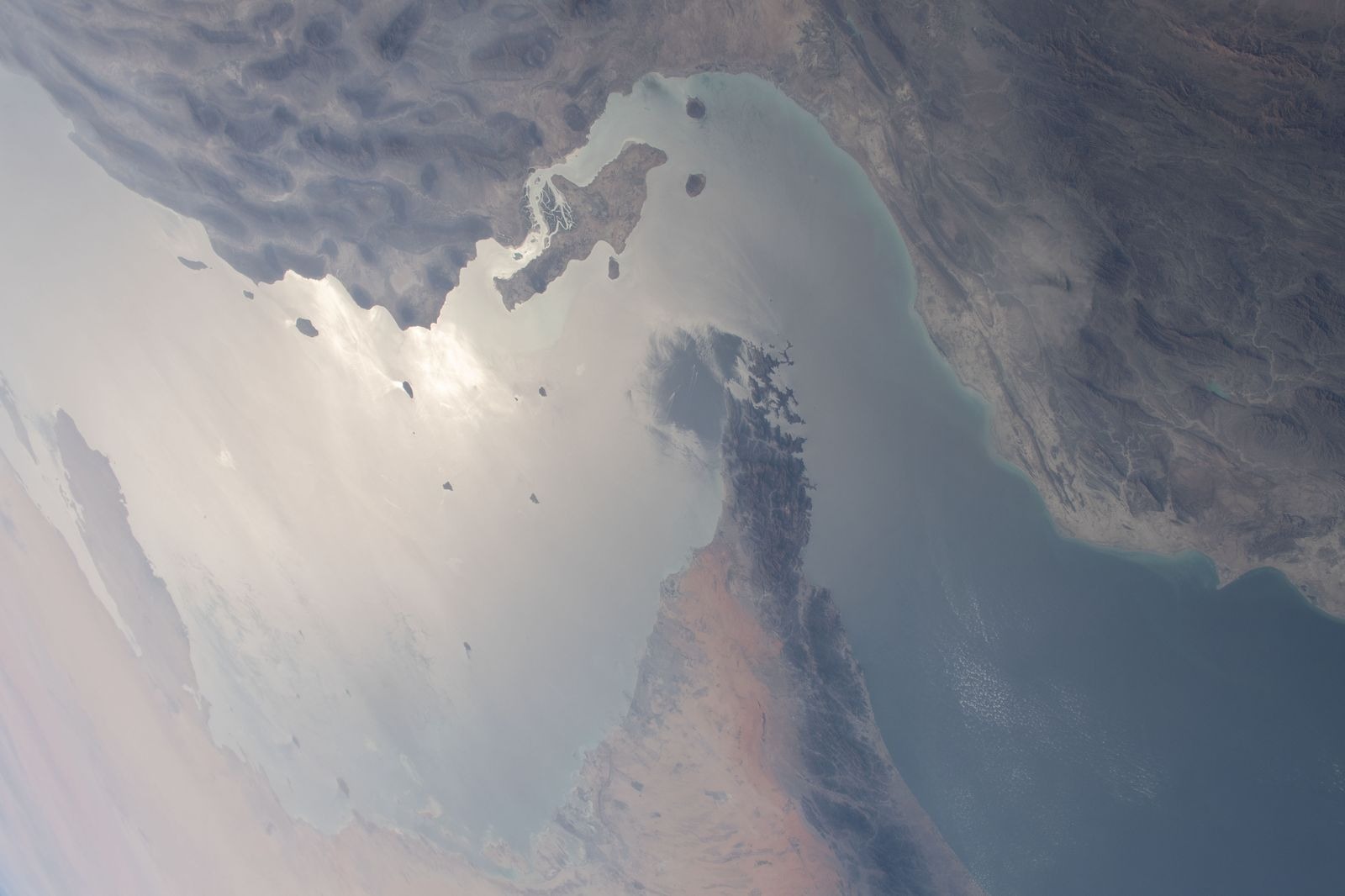
After two days of talks at Lusail Palace, Emir Tamim bin Hamad Al Thani and President Emmanuel Macron issued a joint statement calling for freedom of navigation in the Strait of Hormuz “without constraints or fees” and the full implementation of the Gaza ceasefire; while Macron warned of “extreme caution” and said Iran’s answer on diplomacy was expected “in the next hours or days.”
Key points
- On 20–21 October 2026, French President Emmanuel Macron paid a two-day state visit to Qatar, meeting Emir Sheikh Tamim bin Hamad Al Thani at Lusail Palace in Doha; the two leaders issued a joint statement on Wednesday, 21 October. Al Jazeera (2026-10-22); The Gulf Gazette (2026-10-21)
- The joint statement called for restoring freedom of navigation in the Strait of Hormuz “without constraints or fees”, and for the full implementation of the Gaza ceasefire. Al Jazeera (2026-10-22); Fana News joint statement (2026-10-21)
- Qatar and France called for the withdrawal of Israeli forces from Gaza “in accordance with the agreed arrangements” and for urgent, safe, unhindered humanitarian aid “without conditions or restrictions”. Al Jazeera (2026-10-22); ANTARA via jawawa.id (2026-10-22)
- The World Food Programme said on Monday that about 1.4 million people in Gaza, roughly two-thirds of the population, face acute food insecurity at crisis levels or worse. Al Jazeera (2026-10-22)
- The two leaders condemned Iranian military attacks against countries in the region as “a serious breach of international law”, backed a diplomatic solution ensuring the exclusively peaceful nature of Iran’s nuclear programme, and praised Qatar’s mediation. Fana News joint statement (2026-10-21); Al Jazeera (2026-10-22)
ONE EVENT. THREE READINGS.
The West: a fuel crisis with a diplomatic face.
Western coverage reads Doha through the fuel pump.
What this reading highlights: Le Monde is frank: the Élysée spent a month staring at prices, and the pre-Doha announcement was measured in tons per month, not principles.
Sources: Le Monde, Daily Guardian Europe, EconoTimes
The East: absent from this cycle; and that absence is the signal.
No east-bloc outlet, CNA, The Hindu, NHK, Kyodo, had published on the Doha statement by the time this article was published.
What this reading highlights: That silence is itself data: for the Asian economies that buy Gulf oil, this was not yet a market event.
The Global South: sovereignty language, mediator prestige.
The Southern lens, Al Jazeera in Doha, Fana’s publication of the full statement text, the Gulf press, reads the communiqué as a sovereignty document: Iranian attacks a breach of international law, annexation opposed, Israeli withdrawal from Lebanon demanded; the language of states that have lived the sharp end of other powers’ “arrangements.” Qatar’s mediation is the prestige asset: the small state that talks to everyone, now publicly thanked by a permanent Security Council member.
What this reading highlights: The South’s question is diplomacy’s oldest: when the powerful write statements, who enforces the verbs?
Sources: Fana News joint statement, Al Jazeera, Gulf News (UAE), Anadolu Agency, TRT World, ANTARA via jawawa.id, Qatar Tribune, The Peninsula Qatar, The Gulf Gazette
Sources by lens: 3 West, 0 East, 9 Global South. See every source
THE POINT OF CONVERGENCE
On 21 October 2026, the Emir of Qatar and the President of France issued a joint statement in Doha calling for freedom of navigation in the Strait of Hormuz “without constraints or fees” and the full implementation of the Gaza ceasefire. The statement’s text is public, and its core demands are reported consistently across Western and Global South outlets.
WHAT REMAINS CONTESTED
We diverge: on whether the statement moves anything. The diplomatic reading sees a genuine marker; a rare condemnation of Iranian attacks as a breach of international law paired with praise for Qatar’s mediation and Macron’s “hours or days” timeline for Iran’s answer. The sceptical reading sees a ritual communiqué: no Iranian commitment, no timetable, and the insurance problem Macron himself named remains unsolved.
The story
What Tamim and Macron actually signed in Doha
Emmanuel Macron landed at Hamad International Airport on Tuesday, 20 October, Qatari Rafale jets escorting his aircraft, per Doha’s account, and drove to Lusail Palace to meet Emir Sheikh Tamim bin Hamad Al Thani. It closed a Gulf tour that had taken him through Kuwait, the Emirates, Bahrain and Saudi Arabia. On Wednesday the two capitals published a joint statement: freedom of navigation in the Strait of Hormuz “without constraints or fees”; full implementation of the Gaza ceasefire, with Israeli forces withdrawn “in accordance with the agreed arrangements” and aid delivered “without conditions or restrictions”; opposition to any West Bank annexation and an end to settlement policies and settler violence; condemnation of “Iranian military attacks against countries in the region which constitute a serious breach of international law,” support for a diplomatic solution guaranteeing Iran’s nuclear programme stays exclusively peaceful, and praise for Qatar’s mediation; and on Lebanon, full implementation of the Trilateral Framework Agreement, sovereignty restored, Hezbollah disarmed, a complete Israeli withdrawal, with a warning against a security vacuum once the UN peacekeeping mandate ends. The two countries also agreed to expand defence and economic cooperation. The Gaza and Hormuz demands sit inside the Bureau’s running record of the strait crisis; see our Strait of Hormuz chokepoint file and the account of the closure.
The ledger: who said what, and the numbers attached
Closing the visit on Wednesday, Macron urged “extreme caution” against escalation, after discussing Qatar’s mediation at length with the Emir: “in the next hours or days we will have Iran’s answer” on the US negotiations. He tied the timing to elections in Israel and the US midterms, and named the crisis’s strangest concrete fact: transport costs have been “multiplied by 10 because of too few ships come for transit as they are not insured.” France and the Gulf states, he said, are working on a “mechanism” for that, alongside “diversification in infrastructure” and reduced dependence on Hormuz.
On Tuesday, Qatari mediator Ibrahim bin Sultan Al Hashmi had said diplomatic efforts were ongoing to de-escalate tensions and reopen the strait; on Wednesday, Iran’s Foreign Minister Abbas Araghchi said “Iran is prepared to give diplomacy another chance.” The commercial ledger: before Macron even reached Doha, France secured commitments for an additional 200,000 tonnes of diesel a month from the UAE and Bahrain. Paris also weighed tapping diesel and jet-fuel reserves stockpiled in Oman for Mayotte and Réunion. The humanitarian ledger, from the World Food Programme on Monday: about 1.4 million people in Gaza, roughly two-thirds of the population, face acute food insecurity at crisis levels or worse.
On Wednesday the two capitals published a joint statement: freedom of navigation in the Strait of Hormuz “without constraints or fees”; full implementation of the Gaza ceasefire.
Whether Iran’s “another chance” arrives before the midterms clock runs out
We do not have Tehran’s answer, the one Macron expects “in the next hours or days.” Araghchi’s line is a posture, not a proposal; its content, channel and conditions are unstated. We do not know the shape of the “mechanism” for the insurance problem: a state-backed war-risk backstop, a pooled hull facility, an insured escort corridor, options many, announcement none. Until one exists, the tenfold transport cost is the market’s verdict on the communiqué. We do not know what the “agreed arrangements” in Gaza precisely oblige, a phased withdrawal from the ceasefire’s fine print, or a fresh demand dressed as an existing agreement? Neither capital cited a published text. And we do not know the strait’s timeline, days, weeks, or a war-tax corridor persisting through the midterms.
Europe’s fuel pumps and the world’s oil lifeline run through one strait
Hormuz is the hinge of the global energy map, the narrow waterway through which a decisive share of traded oil and gas passes. A closure, or slow strangulation by insurance costs and tanker harassment, is not a Gulf problem: it is a French winter problem, an Asian import-bill problem, a global inflation problem. The Indian Ocean territories can only be supplied by routes that dodge the strait, which is why Paris is weighing the Oman workaround. The Gaza plank matters for the opposite reason: scale of suffering against thinness of text. With two-thirds of Gaza at crisis-level hunger, a call for aid “without conditions or restrictions” is either the start of a delivery corridor or another line in another statement. Then the Iran plank, the statement’s hardest sentence: a Gulf monarchy and a Western power jointly calling Iranian attacks “a serious breach of international law” puts Tehran on notice while leaving Araghchi’s door ajar. And the Lebanon warning, no vacuum after the UN mission’s mandate ends; shows two capitals gaming out the day after the next collapse. Read beside our account of Washington’s rejected Hormuz offer, Doha shows the Gulf and Europe building a diplomacy that no longer waits for Washington.
Paris is buying time and diesel while Doha banks relevance
The Doha statement is two national strategies wearing one communiqué: for France, first fuel, then foreign policy. With borrowing costs at historic highs and protests at home, Macron needed diesel more than doctrine; and he got it: 200,000 tonnes a month from the UAE and Bahrain, plus the Oman workaround. The Élysée’s “Hormuz is not a bargaining chip but a common good” is elegant; the bargaining was the point: energy security purchased before winter.
For Qatar the prize is positional. Condemning Iranian attacks as a breach of international law, language Paris reportedly insisted on, while keeping the mediation channel warm is the classic Doha straddle: credible in Paris and Washington, still acceptable in Tehran. Macron’s public praise of Qatar’s mediation is the receipt. Every crisis that makes the mediator indispensable raises the price of the mediation.
Tehran’s game is the third vector, and the most cynical. Stepped-up attacks on “shuttle” tankers raise the insurance temperature without quite triggering war; the US Navy escorts them “at great expense.” The regime’s calendar is Washington’s: pressure before the 3 November midterms, on the wager that a White House facing voters prefers talks to escalation. Araghchi’s “another chance” fits that wager, a door held ajar, not a concession. The structural read: a statement that condemns Iran while insurers charge tenfold rates is diplomacy priced by people who do not underwrite hulls. The words are aligned; the risk is not, and that gap, between the Lusail text and the Lloyd’s price, is the week’s real measure.
The insurance market is the real gatekeeper of Hormuz
Macron’s most revealing sentence was in his press remarks, not the joint statement: “too few ships come for transit as they are not insured,” costs up tenfold. Strip away the communiqué and the crisis is an insurance crisis. Underwriters, not admirals, decide whether Hormuz is open; a strait no hull will transit is closed whatever the statements say.
What would it take for insurers to come back to the strait?
The promised “mechanism” must answer it: state-backed war-risk guarantees, a pooled facility, or an insured escort corridor. None appears in the Doha text. Until underwriters price the strait as navigable, every barrel pays the war tax. Kuwait’s diesel and kerosene for Mayotte and Réunion will travel via Oman, a permanent rerouting habit that, once built, does not unbuild. Macron’s “diversification in infrastructure” is the polite name for a post-Hormuz energy geography, pipelines and overland routes that make the strait less of a single point of failure. In Gaza the binding constraint is crossings, trucks and security, not wording. In Lebanon the warning targets a date: when the UN mandate ends, disarmament demands meet a Hezbollah that has not disarmed; a collision Doha anticipates but does not resolve.
Watch for Iran’s answer, the “next hours or days” Macron promised
First marker: Tehran’s answer, due within hours or days, on Macron’s telling, and whether it opens a channel to Washington or hardens into pre-midterm posturing. Second: the insurance mechanism. A named facility with named backers would prove the Doha words have a balance sheet. Third: the Kuwait-Oman shipments to Mayotte and Réunion; the first tankers on the bypass route are physical evidence the post-Hormuz geography is being built in real time.
When do words become ships in the strait?
That is the only test that matters, and it is binary: hulls transiting, premiums falling, the tenfold surcharge unwinding. Beyond the strait: whether the “agreed arrangements” produce visible withdrawals or dissolve into ambiguity; whether the annexation debate advances in Israel’s election season; and whether the Lebanese vacuum starts to fill; with the Lebanese army, or someone else. The Bureau will keep the Iran and Qatar factbook files current as each marker lands.
What we agree on, and what remains open
Established
- On 21 October 2026, the Emir of Qatar and the President of France issued a joint statement in Doha calling for freedom of navigation in the Strait of Hormuz “without constraints or fees” and the full implementation of the Gaza ceasefire. The statement’s text is public, and its core demands are reported consistently across Western and Global South outlets.
Contested
- We diverge: on whether the statement moves anything. The diplomatic reading sees a genuine marker; a rare condemnation of Iranian attacks as a breach of international law paired with praise for Qatar’s mediation and Macron’s “hours or days” timeline for Iran’s answer. The sceptical reading sees a ritual communiqué: no Iranian commitment, no timetable, and the insurance problem Macron himself named remains unsolved.
Still open
- What Tehran’s promised answer will contain.
- The shape of the “mechanism” France and the Gulf states are designing.
- What the “agreed arrangements” in Gaza precisely oblige.
- Or whether the strait reopens in days; or remains a war-tax corridor through the American midterms.
What to watch
Questions, answered
Macron paid a two-day state visit to Qatar on 20–21 October, the final stop of a Gulf tour covering Kuwait, the UAE, Bahrain and Saudi Arabia. He met Emir Sheikh Tamim bin Hamad Al Thani at Lusail Palace, and the two issued a joint statement on Hormuz, Gaza, the West Bank, Iran and Lebanon. The visit also secured commitments for 200,000 extra tonnes of diesel a month from the UAE and Bahrain; energy security was as central as diplomacy.
It is the statement’s demand that ships transit Hormuz freely; no Iranian-imposed restrictions, tolls or harassment. In practice the strait is constrained less by formal fees than by risk: Macron said transport costs have been multiplied by ten because too few ships will transit while uninsured. The phrase targets Tehran’s leverage over the waterway, and the insurance market pricing the strait as a war zone.
Full implementation of the ceasefire: withdrawal of Israeli forces “in accordance with the agreed arrangements,” and urgent, safe, unhindered humanitarian aid “without conditions or restrictions.” The context is dire; the World Food Programme says about 1.4 million Gazans, two-thirds of the population, face acute food insecurity at crisis levels or worse. The statement also opposed any West Bank annexation and backed the two-state solution.
Three markers. First, Iran’s answer on diplomacy, which Macron said would come “in the next hours or days.” Second, the insurance “mechanism” France and the Gulf states are designing; a named facility would prove the Doha words have a balance sheet. Third, physical shipments: Kuwaiti diesel and kerosene routed via Oman to Mayotte and Réunion, bypassing Hormuz. Hulls moving and premiums falling are the only verdict that counts.