 MAGNA BUREAU
The Wire
Rabat moves to shield households from rising prices: a new price commission ahead of Ramadan
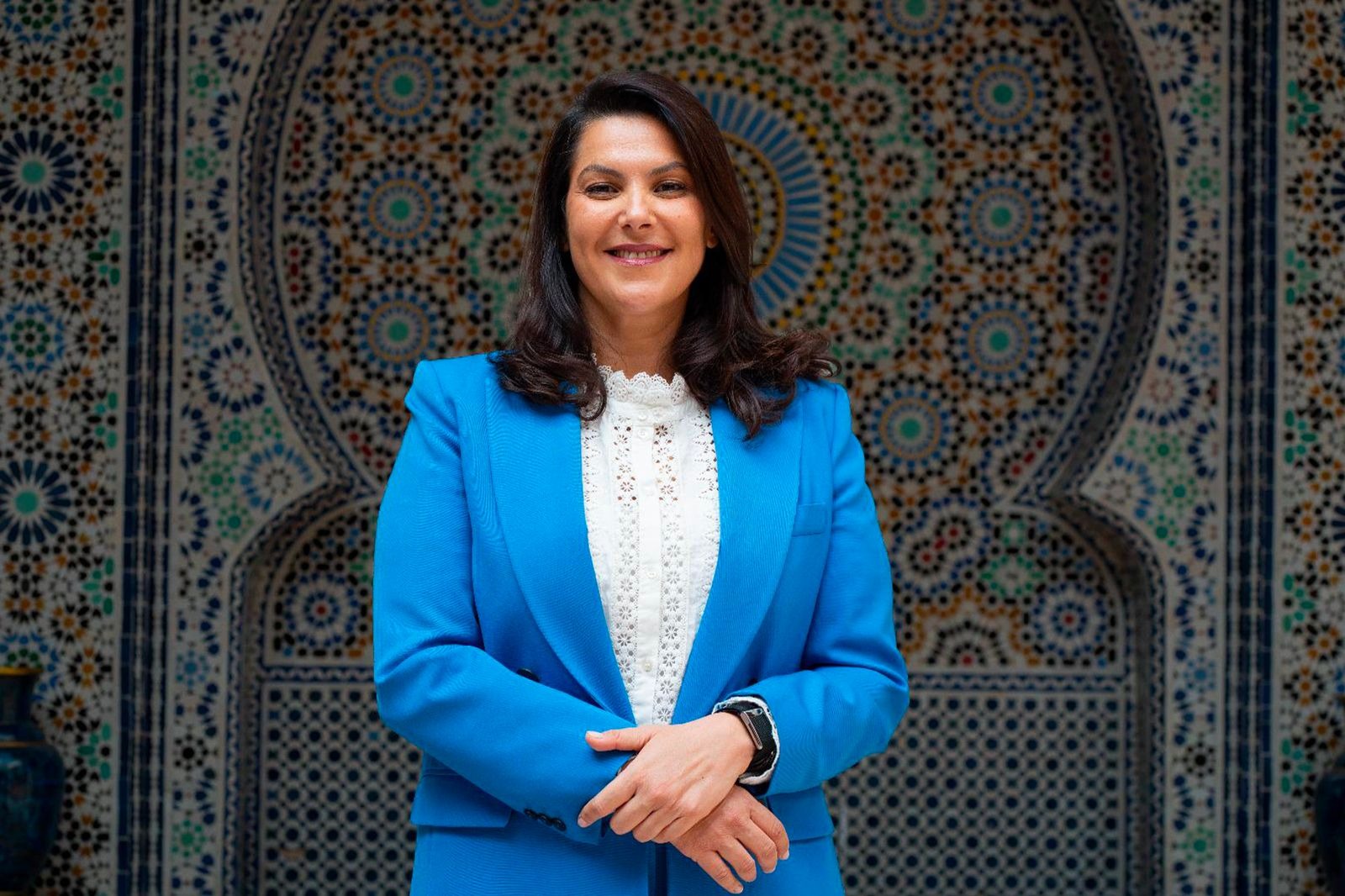
Head of government Fatima Zahra El Mansouri chaired a Rabat meeting on Tuesday that created a permanent interministerial commission to track prices; the sharpest signal yet that purchasing power sits at the top of her government’s agenda.
Key points
- On Tuesday, November 3, 2026, head of government Fatima Zahra El Mansouri chaired a Rabat meeting on the national economic situation and citizens’ purchasing power. 2
- The meeting decided to create an interministerial commission gathering all concerned government departments, to periodically monitor prices and propose protective measures. 1
- A special watch will be placed on products in high demand during Ramadan, when speculation historically intensifies. 4
- Attendees included the interior, economy and finance, agriculture, industry and trade, and transport ministers; the full economic core of the executive. 3
- El Mansouri called purchasing-power defense an ‘absolute priority’, promising ‘practical, concrete and effective measures’ and normal supply of basic products. 3
ONE EVENT. THREE READINGS.
The Western wire barely noticed; and that is the story.
No Reuters, AP or AFP dispatch on the November 3 meeting could be found; the West covered the El Mansouri government this autumn through the MINURSO file and the migration file, not through kitchen-table economics.
What this reading highlights: The West’s Morocco frame remains geopolitical, migration, nearshoring, the Sahel, so a domestic price commission, however consequential for 37 million Moroccans, travels poorly…
The East lens: administered markets are an old science.
No East-Asian outlet reported the Rabat meeting.
What this reading highlights: What the East perspective offers is structural, not episodic: administered price surveillance and state-orchestrated distribution are familiar instruments in East Asia’s state-capitalist toolkit, from China’s…
The South watches the market stall, not the communiqué.
The story lived entirely in the Southern information environment; Morocco’s own press and the regional Arab press tracking Maghreb economics, with Mauritanian outlet Madar covering the October government programme.
What this reading highlights: Ramadan price spikes are a shared experience across the Muslim world, and the pre-Ramadan vigilance committee is a North African ritual.
Sources: Médias24, Le Matin, Barlamane, Yabiladi, Maroc Diplomatique, Hespress, Madar, Hespress
Sources by lens: 0 West, 0 East, 8 Global South. See every source
THE POINT OF CONVERGENCE
AGREE; On Tuesday, November 3, 2026, head of government Fatima Zahra El Mansouri chaired a Rabat meeting on the national economic situation and the purchasing power of Moroccan households.
WHAT REMAINS CONTESTED
AGREE; The meeting decided to create an interministerial commission, gathering all concerned government departments, to monitor price fluctuations through periodic meetings and propose measures protecting consumers’ purchasing power.
The story
Rabat builds a price watchtower; and the head of government takes the chair
On Tuesday, November 3, 2026, Fatima Zahra El Mansouri, Morocco’s head of government, chaired a meeting in Rabat devoted to the national economic situation, the evolution of citizens’ purchasing power, and the impact of price fluctuations on the national market and on Moroccans’ daily lives. At its close, the executive decided to create an interministerial commission gathering all the concerned government departments; a standing body that will track price movements and propose the measures needed to protect consumers.
The timing is political as much as economic. Barely two weeks after El Mansouri presented her 2026–2031 government programme to Parliament, with purchasing power at its core, the Rabat meeting converts a campaign promise into an institution, with a special watch on products in high demand during the holy month of Ramadan, when household consumption spikes and price speculation historically intensifies. The commission will hold periodic meetings and is presented by the government as the fruit of its “vigilance” over questions touching the daily lives of Moroccans.
The commission, the ministers, and the mandate
The meeting reviewed the latest developments in the national economic situation and assessed the repercussions of price fluctuations on the national market and on households. Around the table sat the executive’s full economic core: Interior Minister Abdelouafi Laftit; the secretary general of the government, Hassan Tariq; Economy and Finance Minister Fouzi Lekjaa; Agriculture and Fisheries Minister Khalid Hatimy; Industry and Trade Minister Ryad Mezzour; and Transport Minister Abdessamad Kayouh.
El Mansouri said the government was “fully aware of the current economic situation and the challenges that accompany it,” acknowledging “the scale of the pressures and burdens weighing on Moroccan families, particularly the poor and middle social classes.” She placed the defense of purchasing power at the rank of “absolute priority,” promising “practical, concrete and effective measures” to “mitigate the effects of price rises on citizens’ daily lives”; and pledged to guarantee price stability and “the normal supply of the national market in basic products.”
fully aware of the current economic situation and the challenges that accompany it,
What the communiqué does not spell out
As Maroc Diplomatique noted, the government’s communiqué details neither the nature of the promised measures nor their deployment calendar. It says nothing about the means to be mobilized, nor which products will be targeted first. No chair of the commission has been named, and no date has been set for its first meeting; the periodicity of the promised “periodic meetings” remains undefined.
Unknown, too, is how the new body relates to the pre-Ramadan vigilance committees the interior ministry has convened for years: will it absorb them, or sit above them? The enforcement machinery, inspections, penalties for speculators, is described only in aspiration, not in procedure.
Purchasing power is the new social contract
For the new government, installed after the September 2026 elections, purchasing power is the founding legitimacy. On October 19, El Mansouri promised Parliament electricity-bill compensation for eligible households, direct aid raised to 1,000 dirhams, income-tax reform to lift net wages, and an anti-monopoly overhaul of market organization; in coordination with the Competition Council.
Why does Ramadan move prices in Morocco?
Because demand surges while supply chains tighten. Households spend significantly more during the holy month on food staples, meat, vegetables, cooking oil, and every year the authorities report the same cycle: speculation, hoarding, price manipulation. During Ramadan 2026, inspection campaigns recorded 71,170 field inspections, 6,511 violations, and the seizure of 578.9 tons of unfit products, according to government figures reported by Hespress. A standing commission, rather than a seasonal one, signals that Rabat now treats the Ramadan price spike as structural; not a weather event.
A government that is finally pricing the anxiety
The move is classic political economy. Geopolitically, Morocco is navigating a moment of unusual confidence; the post-MINURSO order in its southern provinces; and converting external capital into domestic consent requires the one currency every household understands: prices. Economically, the government is betting that institutionalized vigilance can do what seasonal campaigns could not: break the middleman chains that inflate food prices between producer and consumer, a reform El Mansouri promised Parliament on October 19.
Demographically, the pressure is real: 2.4 million Moroccans were in unemployment or underemployment in the third quarter of 2026, per the High Commission for Planning. Historically, Moroccan governments that lose the price battle lose the street; the commission is an insurance policy written in advance. The open question is whether the commission publishes its price data: a public price observatory would arm consumers and journalists; a closed one would arm only the administration.
What the commission could move in the markets
First-order: deterrence. A standing commission, created at government level, raises the cost of speculation for wholesalers and middlemen who profit from Ramadan hoarding. Second-order: formalization. If the commission follows through on the October promise to reorganize meat and fish distribution channels and stabilize the export-domestic balance, it will touch the most politically sensitive supply chains in the country; the ones where Industry Minister Mezzour has already warned speculators against exploiting floods and Ramadan demand.
Third-order: the Competition Council. The pledged coordination against monopolies and collusive tendering could extend the commission’s reach from the souk to public procurement.
When will Rabat’s commission show results?
Three dates will test it. The first is the commission’s own inaugural meeting, unannounced, but the Ramadan calendar imposes urgency: the holy month, expected in February 2027, is barely three months away. The second is January 2027, when the automatic electricity-bill compensation for eligible households is due to begin, the first hard deliverable of the purchasing-power agenda. The third is the income-tax reform, the slowest but most structural of the promised levers.
Watch also Morocco’s country profile: whether the commission publishes price data or keeps its findings internal will decide whether it is transparency or theater.
What we agree on, and what remains open
Established
- AGREE; On Tuesday, November 3, 2026, head of government Fatima Zahra El Mansouri chaired a Rabat meeting on the national economic situation and the purchasing power of Moroccan households.
Contested
- AGREE; The meeting decided to create an interministerial commission, gathering all concerned government departments, to monitor price fluctuations through periodic meetings and propose measures protecting consumers’ purchasing power.
Still open
- DISAGREE; On whether the commission changes anything. The government frames it as vigilance with teeth.
- The record of past Ramadan committees, 71,170 inspections in 2026, shows Morocco’s pattern of seasonal, enforcement-heavy price management that the new body must outgrow.
What to watch
Questions, answered
At a meeting chaired by head of government Fatima Zahra El Mansouri in Rabat, the executive created an interministerial commission bringing together all concerned departments. Its mandate is to periodically monitor price fluctuations and propose measures protecting consumers’ purchasing power, with special attention to products in high demand during Ramadan. The commission will hold regular meetings, though its first session has not been scheduled.
Moroccan household spending surges during Ramadan while supply chains tighten, creating fertile ground for speculation and hoarding. During Ramadan 2026, authorities conducted 71,170 field inspections, recorded 6,511 violations and seized 578.9 tons of products unfit for consumption. A standing commission, rather than a seasonal vigilance committee, signals that Rabat now treats the Ramadan price spike as structural, not exceptional.
The full economic core of the executive sat around the table: Interior Minister Abdelouafi Laftit, the secretary general of the government Hassan Tariq, Economy and Finance Minister Fouzi Lekjaa, Agriculture and Fisheries Minister Khalid Hatimy, Industry and Trade Minister Ryad Mezzour, and Transport Minister Abdessamad Kayouh. El Mansouri herself chaired the session, underlining the file’s priority rank.
In her October 19 government programme, El Mansouri pledged automatic compensation of the electricity bill for eligible households starting January 2027, direct social aid raised from 500 to 1,000 dirhams by the end of the term, gradual income-tax reform to lift net wages, meat and fish distribution reform, and anti-monopoly action coordinated with the Competition Council. The new commission is meant to institutionalize that agenda.
The government’s communiqué specifies neither the measures, nor the calendar, nor the resources, nor the priority products. No chair has been named and no first meeting scheduled, and its relationship with the existing pre-Ramadan vigilance committees is unclear. Above all, it is unknown whether the commission will publish its price data; the difference between transparency and theater.