 MAGNA BUREAU
The Wire
Deadline Day in Rabat: Morocco’s Government Adopts the 2027 Finance Bill
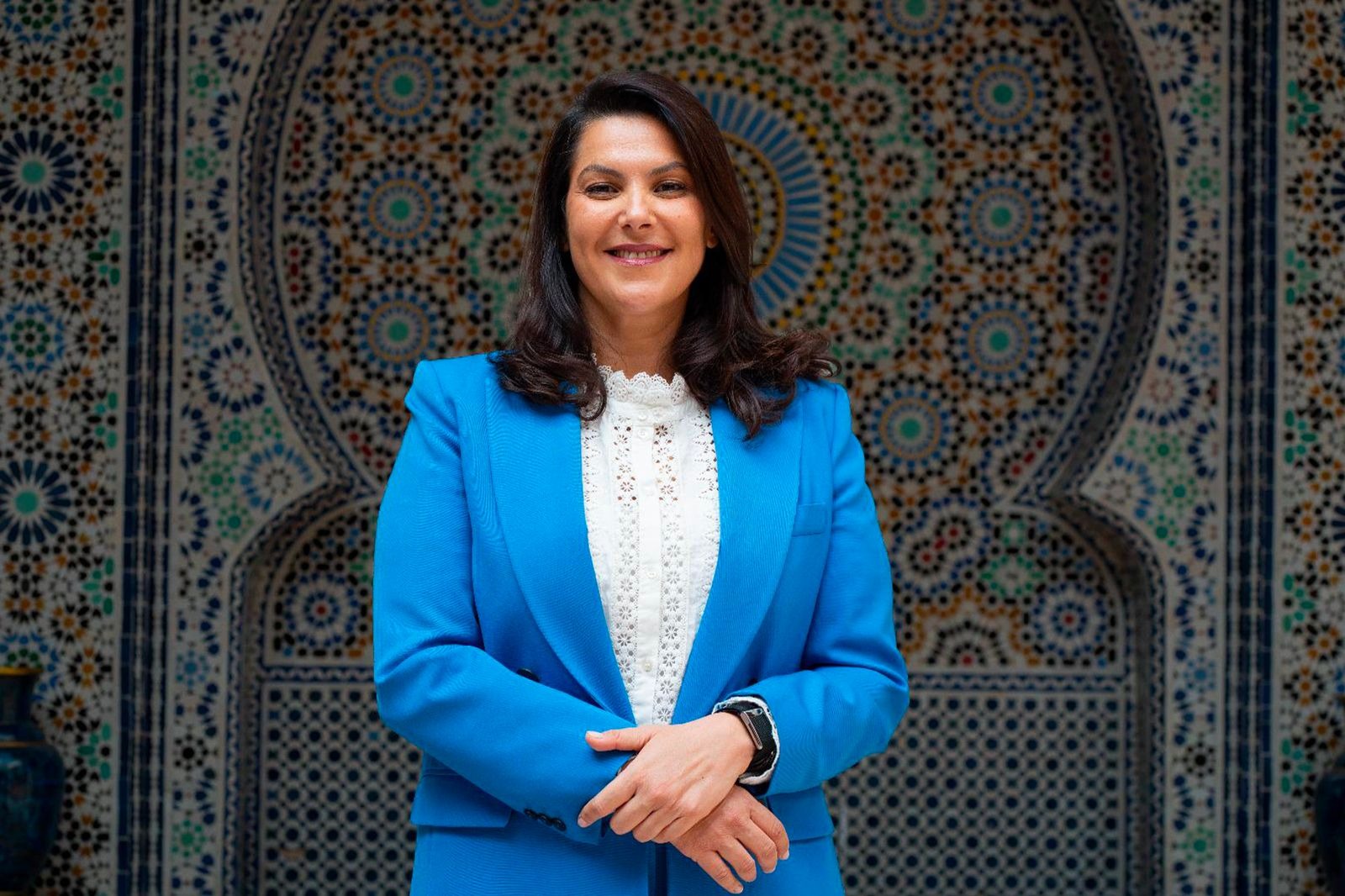
On Tuesday, October 20, 2026, the constitutional deadline, the Government Council chaired by Prime Minister Fatima Ezzahra El Mansouri adopted draft finance law n° 60.26 for 2027, three days after His Majesty King Mohammed VI validated its general orientations. Five priorities, 25 billion dirhams for the territories, and the first budgetary test of the Kingdom’s first woman-led government.
Key points
- On Tuesday, October 20, 2026, Morocco’s Government Council, chaired by Prime Minister Fatima Ezzahra El Mansouri, adopted draft finance law n° 60.26 for the 2027 fiscal year. <a href=”https://ledesk.ma/encontinu/le-conseil-de-gouvernement-adopte-le-projet-de-loi-de-finances-2027/” target=”_blank” rel=”noopener”>Le Desk</a> (October 20, 2026)
- The bill was presented by Fouzi Lekjaa, Minister of the Economy, Finance and Public Performance; the adoption was announced in a communiqué by government spokesperson Samir Belfquih. <a href=”https://fnh.ma/articles/le-conseil-de-gouvernement-adopte-le-projet-de-loi-de-finances-2027” target=”_blank” rel=”noopener”>Finances News Hebdo</a> (October 20, 2026)
- The adoption follows the October 17 Council of Ministers at the Royal Palace in Rabat, chaired by His Majesty King Mohammed VI, which validated the bill’s general orientations under Article 49 of the Constitution. <a href=”https://ledesk.ma/2026/10/17/plf-2027-pouvoir-dachat-jeunesse-et-regions-au-coeur-des-orientations-validees-en-conseil-des-ministres/” target=”_blank” rel=”noopener”>Le Desk</a> (October 17, 2026)
- Five priorities structure the bill: purchasing power and the social state, youth integration, advanced regionalization and territorial development, strategic sovereignty, and a strong economy preserving macroeconomic balances. <a href=”https://islamabadpost.com.pk/morocco-king-chairs-council-of-ministers-on-2027-finance-bill/” target=”_blank” rel=”noopener”>Islamabad Post</a> (October 2026)
- Flagship measures include a structural reform of markets and prices from 2027, an integrated national youth programme for 2027–2031, and some 25 billion dirhams for a new generation of integrated territorial development programmes. <a href=”https://globalnewspakistan.com/morocco-adopts-five-priorities-for-2027/” target=”_blank” rel=”noopener”>Global News Pakistan</a> (October 2026)
ONE EVENT. THREE READINGS.
The Western lens.
From the West, this is a competence test.
What this reading highlights: Western coverage has framed the El Mansouri government around two facts; the first woman to lead a Moroccan government, and a hard October 20…
The Eastern lens.
No Eastern-bloc outlet has independently reported on the adoption; coverage sits entirely in Moroccan, Pakistani and Western press.
What this reading highlights: Through the Eastern analytical prism, the bill is a study in sovereignty-first economics: water, energy, food and digital sovereignty as explicit budget priorities, a green…
The Southern lens.
From the Global South, this is a familiar, closely watched exercise: a developing state squaring the social contract with fiscal discipline, in public, on a constitutional clock.
What this reading highlights: Southern coverage, Moroccan and Pakistani outlets, has lingered on the concrete: the 25 billion dirhams for the regions, the youth programme’s promise to…
Sources by lens: 0 West, 0 East, 0 Global South. See every source
THE POINT OF CONVERGENCE
On October 20, 2026, Morocco’s Government Council, chaired by Prime Minister Fatima Ezzahra El Mansouri, adopted draft finance law n° 60.26 for fiscal 2027, presented by Finance Minister Fouzi Lekjaa and announced by spokesperson Samir Belfquih.
WHAT REMAINS CONTESTED
On emphasis; Moroccan outlets present the adoption as the orderly completion of the constitutional sequence on deadline day, while Western coverage frames it as the first credibility test of a four-day-old government led by the country’s first woman prime minister.
The story
The adoption, on the deadline’s edge
On Tuesday, October 20, 2026, Morocco’s Government Council, meeting in Rabat under the presidency of Prime Minister Fatima Ezzahra El Mansouri, adopted draft finance law n° 60.26 for the 2027 fiscal year. The text was presented by Fouzi Lekjaa, Minister of the Economy, Finance and Public Performance, and the adoption was announced in a communiqué by Samir Belfquih, the government spokesperson. The timing was not incidental: October 20 is the constitutional deadline for tabling the finance bill before Parliament, and the new government, sworn in only four days earlier, met it to the day.
The adoption completes a two-step constitutional sequence. On Saturday, October 17, the Council of Ministers, chaired at the Royal Palace in Rabat by His Majesty King Mohammed VI, had examined and validated the general orientations of the 2027 finance bill under Article 49 of the Constitution, with the finance minister presenting the architecture of the text before the Sovereign. Tuesday’s Government Council turned those orientations into an adopted bill, opening the way to its deposit in Parliament and the start of the legislative examination.
What the bill contains: five priorities, one envelope
The 2027 finance bill is built around five priorities. First, restoring purchasing power and consolidating the social state: a structural reform of markets and prices from 2027, alongside measures supporting purchasing power, the continued generalization of medical coverage, and the revaluation of direct social assistance. Second, youth integration through a national programme for 2027–2031 spanning training, incubation, access to financing, guarantee mechanisms and markets. Third, accelerated advanced regionalization and a new generation of integrated territorial development programmes, funded at about 25 billion dirhams, in line with the High Royal Guidelines on regional competences. Fourth, strategic sovereignty over water, energy, food and digital technology; water security, faster renewables, the green hydrogen offer, the gas infrastructure roadmap, food security and digital sovereignty. Fifth, a strong economy financing social and sovereign ambitions while preserving macroeconomic balances, mobilizing funding for major projects and new sovereign industrial ecosystems.
The bill also backs private investment via the Investment Charter’s support mechanisms and the ongoing reform of the Regional Investment Centres, focused on very small, small and medium enterprises. The macro frame cites a difficult international environment, costly geostrategic conflicts, protectionism, fiercer competition over energy, technology and financing, and, for Morocco, expected 2026 outturns near 4.7% growth, 0.7% inflation and a 3% deficit. This is the first budgetary roadmap of the government programme presented to Parliament days earlier, following the October 17 Council of Ministers chaired by His Majesty the King and the swearing-in of the new government on October 16.
The figures still inside the envelope
What the adopted text says in dirhams and centimes is not yet public. The revenue side, the planned tax measures, the promised widening of the tax base and the income-tax reform announced in the government programme, has not been detailed. The regional allocation of the 25 billion dirhams for territorial development is unknown: which regions, which projects, on what contractual basis between the State and the regions. The design of the structural markets-and-prices reform, the single most politically sensitive measure for household purchasing power, remains to be unveiled. The governance of the integrated youth programme, who runs it, how its financing is guaranteed over 2027–2031, how it absorbs or replaces the scattered sectoral schemes it is meant to supersede, is equally undisclosed. And the parliamentary timetable, from the bill’s deposit to committee examination and the final vote, will only become clear once the text reaches the chambers.
Why this budget is a political statement
A finance bill is never only arithmetic; this one is a declaration of intent by a government that is four days old. By adopting the 2027 budget on the constitutional deadline, the El Mansouri government signals operational seriousness at the exact moment its credibility is being priced; by Parliament, by the markets, and by a young population whose grievances over jobs, education and health services fuelled last year’s Gen Z protests. The bill’s architecture answers those grievances directly: purchasing power first, youth second, the territories third. That ordering is political before it is technical.
It also matters as the first budgetary expression of a historic premiership. Fatima Ezzahra El Mansouri is Morocco’s first woman head of government, appointed by His Majesty King Mohammed VI after the September 23 parliamentary elections won by her party. The budget she has just carried through the Government Council will be read, in Rabat, in the regions, and by Morocco’s partners, as the measure of what that premiership intends to be. For investors watching the 2030 World Cup horizon that Morocco will co-host with Spain and Portugal, the bill’s fifth priority, a strong economy financing sovereign ambitions without breaking macroeconomic balances, is the sentence that counts.
Reading the budget as strategy
Through the five-dimensional prism, the bill reveals its logic. Geopolitically, it is a sovereignty budget: water, energy, food and digital autonomy are the fourth of five national priorities, alongside the green hydrogen offer and the gas roadmap, Morocco positioning itself as an energy and industrial platform between Europe and Africa rather than a price-taker in either market. Economically, the wager is that growth can be faster and cleaner at once: 5% on average against 4.7% expected this year, the deficit under 3%, debt toward 62% of GDP by 2031, an expansion that pays for itself, at least on paper.
Demographically, the bill is addressed to the young: the 2027–2031 programme, the training-to-employment pipeline, the revalued direct aid, answers to the generation that marched last year, and the government knows the budget will be judged on what a young graduate in a secondary city feels of it. Historically, Moroccan finance bills are instruments of continuity, the Kingdom does not do fiscal ruptures, and this one keeps the tradition: same constitutional sequence, same October rhythm, same prudential anchors. Structurally, the bet is on the territories: 25 billion dirhams and advanced regionalization turning national priorities into local realities, the State-region contract as transmission belt. The risk, as ever, is execution, and that is what the next twelve months will test.
The ripple effects to watch
The second-order effects begin in Parliament, where the majority’s cohesion, a four-party coalition still finding its rhythm, will be tested amendment by amendment, and where the opposition will probe the gap between the five priorities and their price tags. They continue in the regions, where governors and regional councils will now lobby for their share of the 25 billion dirhams, turning a national envelope into a territorial negotiation. They reach the markets through the prices reform: a structural overhaul of how prices form in Morocco touches every household and every merchant, and its sequencing will determine whether it reads as liberation or shock. They touch the private sector through the Investment Charter’s consolidated mechanisms and the Regional Investment Centres’ reform; the instruments by which the bill’s growth wager must actually be financed. And they reach outward: partners and lenders will read the adopted text for the seriousness of the 3% deficit commitment, the credibility of the revenue measures, and the realism of a 5% growth path in a protectionist world.
What happens between now and the parliamentary vote
The bill now goes to Parliament, where the legislative examination begins: committee scrutiny, amendments, and the back-and-forth between the chambers that Moroccan budget seasons always bring. The questions to track are concrete.
What will the revenue side reveal?
The adopted bill’s tax measures, the base-widening, the income-tax reform, the anti-evasion instruments, will be published with the deposit, and they are where the 5% growth and 3% deficit targets meet reality. Watch whether the burden falls on consumption, on income, or on the long-promised fight against the informal economy.
How will the 25 billion dirhams be shared?
The territorial envelope’s allocation across regions and programmes will show whether advanced regionalization is a slogan or a method. The State-region contracts, the deconcentration charter’s implementation, and the first project lists are the documents that matter.
When does the youth programme start delivering?
The 2027–2031 integrated youth programme must move from bill to budget lines to field operators within months if it is to answer the generation it targets. Its governance design, single window or scattered schemes, will be the first credibility test of the El Mansouri government’s execution.
What we agree on, and what remains open
Established
- On October 20, 2026, Morocco’s Government Council, chaired by Prime Minister Fatima Ezzahra El Mansouri, adopted draft finance law n° 60.26 for fiscal 2027, presented by Finance Minister Fouzi Lekjaa and announced by spokesperson Samir Belfquih.
- It follows the October 17 Council of Ministers, chaired by His Majesty King Mohammed VI, which validated the bill’s general orientations under Article 49 of the Constitution.
Contested
- On emphasis; Moroccan outlets present the adoption as the orderly completion of the constitutional sequence on deadline day, while Western coverage frames it as the first credibility test of a four-day-old government led by the country’s first woman prime minister.
- Pakistani coverage stresses the five priorities’ substance, Western coverage the targets’ plausibility.
Still open
- The revenue-side measures and their distributional impact.
- The regional allocation of the 25 billion dirhams.
- The design and governance of the youth programme and the prices reform.
- The parliamentary timetable from deposit to final vote.
- Whether the 5% average growth target for 2027–2031 survives the legislative debate.
What to watch
Questions, answered
It is draft finance law n° 60.26 for the 2027 fiscal year, adopted by Morocco’s Government Council on October 20, 2026, under Prime Minister Fatima Ezzahra El Mansouri. Presented by Finance Minister Fouzi Lekjaa, it sets the state’s budgetary roadmap around five priorities: purchasing power, youth, regions, sovereignty and economic strength.
Morocco’s constitutional calendar requires the finance bill to be tabled before Parliament by October 20. The sequence runs from the Council of Ministers, chaired by His Majesty King Mohammed VI, which validates the general orientations under Article 49, to the Government Council’s adoption, and then to the bill’s deposit in Parliament for legislative examination.
First, purchasing power and the social state, including a structural markets-and-prices reform. Second, youth integration via a 2027–2031 national programme. Third, advanced regionalization with about 25 billion dirhams for territorial development. Fourth, strategic sovereignty over water, energy, food and digital affairs. Fifth, a strong economy preserving macroeconomic balances.
She is Morocco’s first woman head of government, appointed by His Majesty King Mohammed VI after her party won the September 23, 2026 parliamentary elections. Her government was sworn in on October 16, 2026, and the 2027 finance bill, adopted four days later, is its first major economic act.
The government targets average annual growth of 5% from 2027 to 2031, up from about 4.7% expected in 2026, with the fiscal deficit held under 3% of GDP, inflation at 2%, and public debt declining toward 62% of GDP by 2031. The 2027 finance bill is the first budgetary instrument meant to put that trajectory into law.