 MAGNA BUREAU
The Wire
El Mansouri presents Morocco’s 2026–2031 government programme: seven priorities, 5% growth, and a social contract in figures
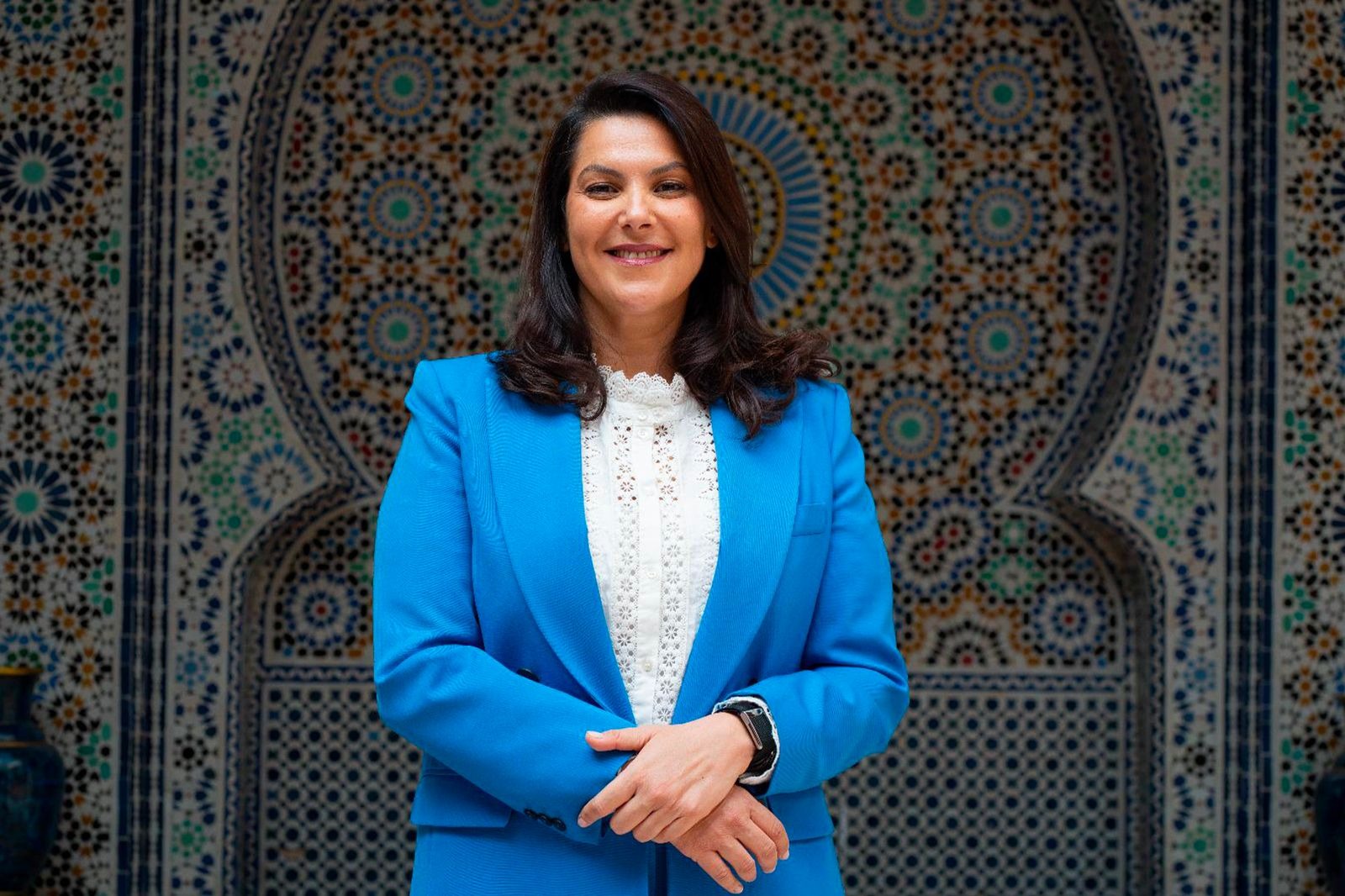
Three days after her cabinet was sworn in at the Royal Palace, Morocco’s first woman head of government laid out a quantified roadmap before the two Houses of Parliament, from doubling direct social aid to a 3,000-dirham pension floor, and solicited the confidence of the House of Representatives.
Key points
- On Monday 19 October 2026, Fatima Ezzahra El Mansouri presented her government’s 2026–2031 programme before the two Houses of Parliament in joint plenary session in Rabat; seven priorities framed by the royal orientations and the New Development Model, with a quantified macroeconomic path. <a href=”https://ledesk.ma/2026/10/19/croissance-pouvoir-dachat-retraites-les-engagements-du-gouvernement-el-mansouri-pour-2026-2031/” target=”_blank” rel=”noopener”>Le Desk</a> (19 Oct 2026); original reporting by Lina Ibriz
- The programme targets average growth of 5% a year (2027–2031), inflation around 2%, the budget deficit within 3% of GDP and public debt down to about 62% of GDP by 2031, via a wider tax base, more efficient spending and a bigger contribution from public enterprises. <a href=”https://ledesk.ma/2026/10/19/croissance-pouvoir-dachat-retraites-les-engagements-du-gouvernement-el-mansouri-pour-2026-2031/” target=”_blank” rel=”noopener”>Le Desk</a> (19 Oct 2026); <a href=”https://fnh.ma/articles/programme-gouvernemental-2026-2031-mansouri” target=”_blank” rel=”noopener”>Finances News Hebdo</a> (19 Oct 2026)
- Direct social aid would double from 500 to 1,000 dirhams by the end of the legislature, with automatic compensation of the full monthly electricity bill (up to 100 dirhams) for eligible households’ primary residences; no paperwork required. <a href=”https://fnh.ma/articles/programme-gouvernemental-2026-2031-mansouri” target=”_blank” rel=”noopener”>Finances News Hebdo</a> (19 Oct 2026)
- Pensions: a minimum of 3,000 dirhams a month across regimes, and widows’ pensions raised to 100% of the deceased spouse’s primary pension; regional transfers to reach at least 12 billion dirhams from 2027; 30% of public contracts reserved for Moroccan SMEs. <a href=”https://fnh.ma/articles/programme-gouvernemental-2026-2031-mansouri” target=”_blank” rel=”noopener”>Finances News Hebdo</a> (19 Oct 2026)
- The head of government solicited the confidence of the House of Representatives; under Article 88, the government is formally invested once an absolute majority of the 395 members (198 votes) approves the programme; the four-party coalition holds 207 seats. <a href=”https://fnh.ma/articles/programme-gouvernemental-2026-2031-mansouri” target=”_blank” rel=”noopener”>Finances News Hebdo</a> (19 Oct 2026); <a href=”https://en.mcg24.com/fatima-ezzahra-el-mansouri-succeeds-akhannouch/” target=”_blank” rel=”noopener”>mcg24</a> (17 Oct 2026)
ONE EVENT. THREE READINGS.
The Western reading centres institutional continuity and political stability.
Le Monde’s 17 October analysis of the cabinet, headlined that, except for women, very little changes, framed the new executive as a careful renewal: the sovereign portfolios (Interior, Foreign Affairs, Justice) untouched, the technocrat Fouzi Lekjaa promoted to Finance, and a first-ever ministry for artificial intelligence as the modernising signal.
What this reading highlights: The Western press will be watching two things above all; whether the 5%-growth-with-3%-deficit arithmetic survives contact with the 2027 budget, and whether the first…
Sources: Le Monde
The Eastern reading is, honestly, an absence.
No East outlet, CNA, The Hindu’s Asia coverage, NHK, Kyodo, was found carrying the programme presentation: a domestic Moroccan parliamentary procedure, with no great-power stakes and no Beijing–Moscow–Delhi angle, did not register on the East’s news agenda.
What this reading highlights: That is a genuine absence, not a search failure, and it is itself informative: Morocco’s government formation is followed in the East only when it…
The Southern reading, the Moroccan press itself, centres the social contract.
Le Desk and Finances News Hebdo foreground purchasing power, youth and the regions: the doubled social aid, the automatic electricity compensation, the 12-billion-dirham regional envelope and the youth programme are treated as the bill’s answer to the discontent that drove the 38% turnout and the youth mobilisations of the past year.
What this reading highlights: The programme is read domestically less as a rupture than as the continuity of the King’s strategic doctrine; water, energy, food and digital sovereignty…
Sources: Le Desk, Finances News Hebdo, mcg24
Sources by lens: 1 West, 0 East, 3 Global South. See every source
THE POINT OF CONVERGENCE
On 19 October 2026, El Mansouri presented the 2026–2031 government programme before the two Houses of Parliament in joint session in Rabat.
WHAT REMAINS CONTESTED
Emphasis. Moroccan outlets centre the social contract; purchasing power, youth, the regions and the quantified pledges.
The story
On Monday 19 October 2026, Fatima Ezzahra El Mansouri presented the
On Monday 19 October 2026, Fatima Ezzahra El Mansouri presented the programme of her government for the 2026–2031 legislature before the two Houses of Parliament meeting in joint plenary session in Rabat. Designated by His Majesty King Mohammed VI on 29 September as the first woman to head a government in the Kingdom’s history, she laid out seven priorities, the rule of law, the fight against corruption, social cohesion, living conditions, youth insertion, strategic sovereignties and economic development, anchored to a quantified macroeconomic path: average growth of 5% a year between 2027 and 2031, inflation contained around 2%, the budget deficit held within 3% of GDP, and public debt brought down to about 62% of GDP by 2031.
The presentation comes three days after the 32-member cabinet was sworn in at the Royal Palace in Rabat on 16 October, sealing the four-party coalition born of the 23 September elections, and one day after the dismissal of Madiha Khayr, whose ministerial tenure lasted 48 hours. In closing, the head of government solicited the confidence of the House of Representatives; the constitutional step that, under Article 88, formally invests the government once an absolute majority of the 395 members approves the programme.
What did El Mansouri actually promise?
The social contract is the programme’s centre of gravity, and it is expressed in figures. Direct social aid would rise from 500 to 1,000 dirhams by the end of the legislature, with eligibility based on actual household income rather than declared status. An automatic compensation mechanism would cover the full monthly electricity bill, when it does not exceed 100 dirhams, for the primary residence of eligible households, with no paperwork and no administrative visit. A progressive reform of personal income tax is announced to lift employees’ net income and encourage declared employment,.
On pensions, the head of government defended a comprehensive reform negotiated with social and economic partners: the minimum of the main pensions would be raised gradually to 3,000 dirhams a month across the different regimes, widows would receive a pension equal to 100% of the deceased spouse’s primary pension; up from 50%, with coverage extended to people with no pension at all. Territorially, financial transfers to the regions would be raised to at least 12 billion dirhams from 2027, under programme contracts between the State and the regions carrying explicit employment, investment and disparity-reduction targets.
The institutional chapter is unusually muscular. El Mansouri announced the criminalisation of illicit enrichment, sanctions for conflicts of interest, stronger mandatory asset declarations and penalties for leaking information that yields undue advantages. Public procurement would face control mechanisms and bid-rigging investigations, with contract holders legally required to channel 30% of contract value to Moroccan small and medium enterprises. For the official status of Amazigh, a 2-billion-dirham special fund and a permanent ministerial commission would track integration across public life, with an annual progress report.
Youth insertion gets its own calendar: from 2027, a national programme with territorial social support would train 100,000 young people a year to business needs and give around 100,000 a first professional experience, apprenticeship capacity would rise to between 150,000 and 200,000 beneficiaries a year, and 60,000 businesses would be supported through incubation and easier access to financing, guarantees and public contracts. On strategic sovereignties, the programme sets renewables above 52% of the energy mix by 2030 alongside the Morocco green-hydrogen offer and the gas-infrastructure roadmap, 1.8 billion cubic metres of desalinated water mobilised by 2031, national seeds rising from 20% to 50% of the total during the term, and a tourism roadmap targeting 26 million visitors in 2030. Diplomatically, she reaffirmed the priority given to the Moroccan Sahara and the autonomy initiative under Moroccan sovereignty.
What remains unknown is the most politically immediate: whether the House
What remains unknown is the most politically immediate: whether the House of Representatives has yet voted confidence in the programme, and with what result. The presentation solicited that confidence; the vote, requiring an absolute majority of the 395 members, or 198 votes against the coalition’s 207 seats, had not been reported by the Moroccan outlets’ Monday-afternoon accounts. The income-tax reform’s brackets and timetable are equally undisclosed, as are the revenue-side measures meant to square the 5% growth target with the 3%-of-GDP deficit ceiling: the programme promises a wider tax base, more efficient spending and a bigger contribution from public enterprises, but the hard arithmetic is not yet public.
Nor is the regional split of the 12-billion-dirham envelope, or the design of the markets-and-prices reform announced for 2027. Two personnel questions stay open: whether Finance Minister Fouzi Lekjaa will keep the presidency of the football federation while running the nation’s finances, a dual role noted but unconfirmed, and who will take the vocational-training and qualification portfolio left vacant by Madiha Khayr’s dismissal on 18 October.
Why is the confidence vote the real test?
This is the moment the El Mansouri government stops being a royal appointment and becomes a parliamentary government. Under Article 88 of the Constitution, the programme presented on Monday must win the confidence of the House of Representatives by an absolute majority of its members, 198 of 395, before the executive is formally invested. With 207 seats, the four-party coalition clears the bar on paper, but the vote is the first public measure of its discipline: any abstention or absence in the majority’s ranks would be read instantly as a crack in the PAM–Istiqlal–USFP–PPS edifice, one day after the Khayr dismissal tested its crisis reflexes.
The stakes go beyond procedure. El Mansouri is the first woman to head a Moroccan government, appointed after elections that recorded 38% turnout, the lowest in nearly two decades, and she has chosen to govern by quantified promise: 5% growth, doubled social aid, a 3,000-dirham pension floor. Every figure is now a future headline, for her supporters and her opponents alike.
Read the programme as an instrument, not just a speech
Read the programme as an instrument, not just a speech. El Mansouri has done something Moroccan heads of government rarely do: she has converted the traditional generalities of a programme speech into a ledger of checkable numbers; 500 to 1,000 dirhams, 3,000 dirhams, 30%, 12 billion, 100,000 a year, 26 million, 52%. That is a deliberate political technique. Numbers discipline the administration (each ministry now owns a target), they disarm the opposition’s vagueness charge, and they give the press a standing invitation to audit.
The fiscal arithmetic is the programme’s load-bearing wall. Five percent average growth with a 3%-of-GDP deficit and debt falling to 62% of GDP by 2031 requires three things to happen at once: a wider tax base without politically toxic rate hikes, public enterprises contributing more, and spending efficiency gains under the organic finance law reform. The Council of Ministers’ 2027 guidelines, 4.7% growth, 0.7% inflation, deficit to 3%, suggest the trajectory starts credibly, but the revenue side of the equation is the part of the programme still written in pencil.
Second-order effects are already visible
Second-order effects are already visible. The social-aid doubling is now priced into household expectations: any delay or retargeting will be felt as a broken promise, not a policy adjustment. Businesses will plan around the 30% SME procurement rule, and around its enforcement, which is where Moroccan procurement reforms have historically lived or died. The regions, promised at least 12 billion dirhams from 2027 under explicit contracts, will negotiate hard over the split; the advanced-regionalisation agenda just acquired its first concrete number. For the opposition, notably the PJD, which called the September elections tainted; the programme hands a ready-made audit grid: each quantified pledge is a future question in the House.
Three dates structure what comes next
Three dates structure what comes next. First, the confidence vote in the House of Representatives, the constitutional investiture under Article 88, which will confirm whether the 207-seat coalition votes as one bloc. Second, 20 October, the deadline for tabling the 2027 finance bill, the first document that must translate Monday’s figures into budget lines. Third, the appointment of a successor to Madiha Khayr at vocational training and qualification, the vacant portfolio that will test whether the coalition has absorbed the shock of the 48-hour dismissal. Beyond that, the parliamentary debate on the programme opens the legislature’s real work: commissions, amendments and the slow conversion of a presentation into law. The Bureau will follow the vote.
What we agree on, and what remains open
Established
- On 19 October 2026, El Mansouri presented the 2026–2031 government programme before the two Houses of Parliament in joint session in Rabat.
- Le Desk and Finances News Hebdo report the same seven priorities and the same macroeconomic targets; 5% average growth 2027–2031, inflation around 2%, deficit within 3% of GDP, public debt to about 62% of GDP by 2031.
Contested
- Emphasis. Moroccan outlets centre the social contract; purchasing power, youth, the regions and the quantified pledges.
- Western coverage of the new executive (Le Monde, 17 Oct) centres institutional continuity, the untouched sovereign portfolios and the technocratic profile of Finance Minister Fouzi Lekjaa.
Still open
- Whether the House of Representatives has voted confidence and the result.
- The income-tax brackets and timetable.
- The revenue-side measures behind the 5%-with-3%-deficit arithmetic.
- The regional split of the 12-billion-dirham envelope.
- Who replaces Madiha Khayr at vocational training.
What to watch
Questions, answered
Fatima Ezzahra El Mansouri, designated by His Majesty King Mohammed VI on 29 September as Morocco’s first woman head of government, presented her government’s 2026–2031 programme before the two Houses of Parliament in joint plenary session. She laid out seven priorities, rule of law, anti-corruption, social cohesion, living conditions, youth insertion, strategic sovereignties and economic development, and solicited the confidence of the House of Representatives under Article 88.
Average growth of 5% a year between 2027 and 2031, inflation contained around 2%, the budget deficit held within 3% of GDP, and public debt brought down to about 62% of GDP by 2031. The programme promises a wider tax base, more efficient public spending under the organic finance law reform, and a bigger contribution from public enterprises and establishments to square growth with fiscal discipline.
Direct social aid would rise from 500 to 1,000 dirhams by the end of the legislature, targeted on actual household income. An automatic mechanism would compensate the full monthly electricity bill, when it does not exceed 100 dirhams, for the primary residence of eligible households, with no paperwork or administrative visit. A progressive income-tax reform and reorganised meat and fish supply chains complete the purchasing-power chapter.
A comprehensive reform negotiated with social and economic partners would gradually raise the minimum of the main pensions to 3,000 dirhams a month across the different regimes, extend coverage to people with no pension, harmonise rights and obligations between regimes while preserving acquired rights, and raise widows’ pensions to 100% of the deceased spouse’s primary pension, up from 50%.
Under Article 88 of the Constitution, the government is considered invested once its programme wins the confidence of the House of Representatives by an absolute majority of its members; 198 of the 395 seats. The PAM–Istiqlal–USFP–PPS coalition holds 207 seats, clearing the bar on paper; the vote, not yet reported at the time of the Monday-afternoon press accounts, is the first public test of its discipline.