 MAGNA BUREAU
The Wire
Iran vows ‘apocalyptic war’ if U.S. strikes again; and bars U.S. warships from the Gulf
Tehran’s top generals answered Washington’s weekend-strike talk with their starkest warning yet: any new attack would bring ‘absolute victory’ in an ‘apocalyptic war’, and American warships will never again enter the Persian Gulf.
Key points
- On Saturday 24 October 2026, Iran’s Revolutionary Guards spokesman Brig. Gen. Hossein Mohebbi warned that any renewed U.S. or Israeli attack would bring “absolute victory in this apocalyptic war”. 1
- Armed forces chief Maj. Gen. Ali Abdollahi said U.S. warships will not be allowed into the Persian Gulf “under any circumstances and at any time”. 3
- The warnings followed U.S. Ambassador to Turkey Tom Barrack’s remark on Friday that Washington could “absolutely” strike Iran as soon as this weekend. 4
- President Donald Trump told a Florida rally on Friday that the U.S. “may do another little Epic Fury”; then said he knew nothing about Barrack’s weekend-strike claim. 3
- The Guards said on Friday that two supertankers carrying more than 4.5 million barrels of crude were abandoned at sea after hitting mines near the Strait of Hormuz. 7
ONE EVENT. THREE READINGS.
A warning read through the envoy’s words.
Coverage in Israel and the West fastened on the gap between Barrack and Trump.
What this reading highlights: The Times of Israel reported Barrack’s “Absolutely” in full, then immediately noted his lack of a direct Iran role and Trump’s dismissal of the claim.
Sources: The Times of Israel
Tehran’s deterrence, stated plainly.
Asian coverage carried Tehran’s statements with minimal mediation.
What this reading highlights: The Hindu reported Mohebbi’s and Abdollahi’s words in full and set them against the reported American and Israeli strike plans and the $117 oil price.
Sources: The Hindu, Press TV, Daily Sabah, ANI
The Gulf’s exposure, from Doha and Karachi.
Al Jazeera, reporting from Tehran, gave the story its regional frame: Iranian forces prepared to fire on American warships, a vow to “drown” the United States and Israel in a “quagmire”, and Trump’s Florida rally remark about “another little Epic Fury”.
What this reading highlights: Dawn, carrying Anadolu’s account from Pakistan, foregrounded the contradiction at the story’s centre; an envoy who says “Absolutely”, a president who says he knows…
Sources: Al Jazeera, Dawn
Sources by lens: 1 West, 4 East, 2 Global South. See every source
THE POINT OF CONVERGENCE
On Saturday 24 October 2026, Iran’s senior military voices warned that any renewed American or Israeli attack would trigger an “apocalyptic war” in which Tehran claims “absolute victory”, and that U.S. warships will not be allowed into the Persian Gulf; statements carried by Iranian state media and reported the same day by outlets in Asia, the Gulf and the West.
WHAT REMAINS CONTESTED
Whether the warnings are deterrence designed to prevent a strike, or a genuine preview of regional retaliation against Gulf states, shipping and undersea cables.
The story
The warnings that turned a weekend into a flashpoint
Iran’s military leadership issued its starkest warning of the eight-month war on Saturday 24 October 2026: any renewed American or Israeli attack would meet an “apocalyptic war”, and American warships would never again enter the Persian Gulf. The statements, hours apart in Tehran, landed a day after Washington’s envoy to Turkey said a U.S. strike could come “absolutely” this weekend.
Brig. Gen. Hossein Mohebbi, a spokesman for the Islamic Revolutionary Guard Corps (IRGC), said preserving Iran’s territorial integrity and identity was now among the nation’s most important responsibilities. If attacked, he said, Iran “will achieve absolute victory in this apocalyptic war”; a war that would “decide the fate” of other nations in the region, a reference to the Persian Gulf monarchies. The remarks were reported by the state-run Press TV.
In a separate state-television statement, armed forces chief Maj. Gen. Ali Abdollahi said U.S. naval forces could no longer approach the Persian Gulf. “The U.S. President must only dream of their military and army entering the Persian Gulf again. They will take this wish to their graves,” he said. “We will under no circumstances and at no time allow rusty U.S. military vessels to enter the Persian Gulf.”
What Tehran said, in its own words
The two statements share one logic: the war that began on 28 February 2026 is not over, and Tehran intends the next phase to cost far more than the last two. In the first and second phases, Iran retaliated by striking U.S. bases and energy facilities in Gulf kingdoms. Abdollahi turned Washington’s claims back on it: if Iran’s capabilities had been destroyed, why had U.S. warships not dared approach the Strait of Hormuz or Iran’s borders?
The trigger for Saturday’s warnings is documented. On Friday, Tom Barrack, the U.S. ambassador to Turkey and Washington’s special envoy for Syria and Iraq, who holds no direct role on the Iran file, told online host Mario Nawfal that a strike was possible within days. Asked whether one could come this weekend, he answered: “Could there be a strike this weekend? Absolutely.” The same day, President Donald Trump told a Florida rally the U.S. military “may do another little Epic Fury”, the military’s name for its war on Iran. When asked about Barrack’s remarks, however, Trump said he knew nothing about them; and he had previously said no major action would come before the U.S. congressional elections on 3 November. The sequence is covered in our report on the envoy’s weekend warning.
What would a third phase of the war actually hit?
Beyond the rhetoric, the material facts of the standoff are these. The United States has imposed a blockade on Iranian ports, choking the oil exports that fund Tehran. Iran has restricted traffic through the Strait of Hormuz since February, requires transit permission, and has repeatedly targeted ships using a southern route near Oman’s coast. On Friday the Guards said two supertankers carrying more than 4.5 million barrels of crude had been abandoned at sea after hitting mines in the strait, their engine rooms disabled by explosion and fire, the Guards’ Sepah News site said; a claim not independently confirmed. Tehran has widened the threat surface: Mohsen Rezaei, secretary general of Iran’s Security Council, told Press TV last week that Gulf fibre-optic cables could be targeted if Iran is attacked; at least seven important undersea cables run through or near the strait.
apocalyptic war
The decisions nobody has confirmed
Nothing in the public record confirms that a strike has been authorised, that targets have been chosen, or that a date has been set. Barrack’s remark was made on a podcast, not at a podium, and the president’s own response undercut it within hours. American and Israeli media have reported that both countries have drawn up plans to resume strikes, but a plan is not an order, and the reported sequencing points away from this weekend, not toward it.
Nor is it clear what Tehran’s threats would mean in practice. Would retaliation strike Gulf energy facilities, as in earlier phases, or the undersea cables Rezaei named, or U.S. bases, or all three? Would the Gulf monarchies, several hosting American forces, be treated as participants or bystanders? And the mined-tanker episode itself remains one-sided: the claim comes from the Guards, the vessels are unnamed in the reports, and no independent confirmation has surfaced.
A waterway the world cannot route around
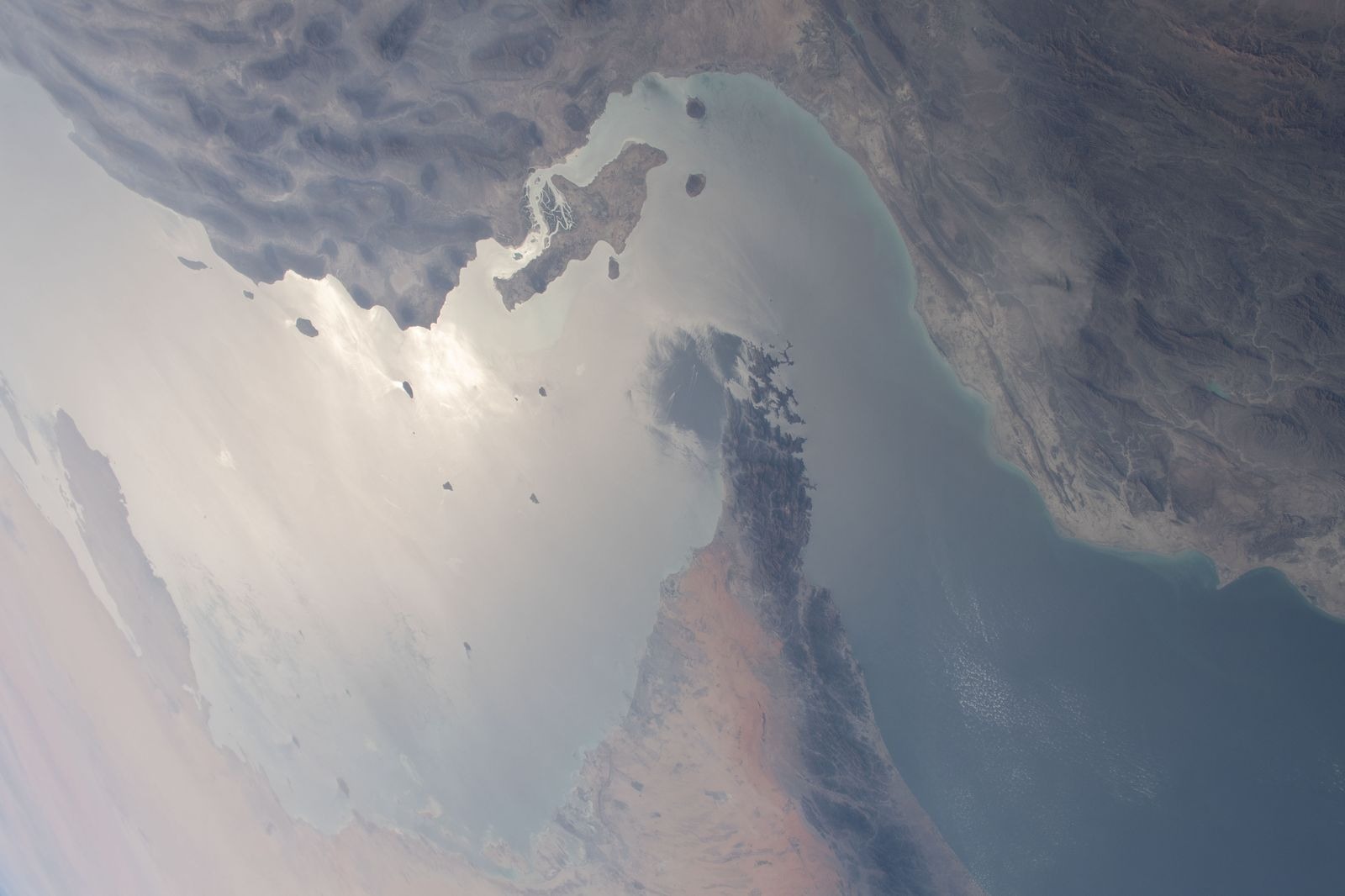
The Persian Gulf is not a regional dispute with global footnotes; it is the hinge of the world energy system. The strait is the only sea passage from the Gulf’s oil and gas fields to the open ocean, and in peacetime around a fifth of the world’s traded oil and gas moved through it. That is why a war of words moves prices in London and Tokyo within hours, and why Gulf capitals watch every statement as one about them. Mohebbi’s remark that a new war would “decide the fate” of other nations in the region was heard, correctly, as a threat addressed to them as much as to Washington.
Why does one weekend of warnings move the oil price?
Because the market is pricing a chain reaction, not a headline. Brent crude jumped on Friday to $117 a barrel, its highest since April, after Barrack’s remarks and the mined-tanker reports. Traders weigh three linked risks: strikes on Gulf energy infrastructure; a Hormuz closure, partial or total; and sabotage of the cables and data centres carrying the Gulf’s financial flows. The political calendar sharpens the edge: Israel votes on Tuesday, the United States votes on 3 November, and both campaigns are already using the Iran question as a test of resolve.
Deterrence is the message; on both sides
Read through the Bureau’s five dimensions, Saturday’s exchange is less a countdown to war than a contest in signalling. Geopolitically, both capitals speak past each other to third parties: Tehran warns the Gulf monarchies that hosting American power has a price, while Washington’s split messaging keeps Tehran guessing without committing forces. Economically, the signalling already works: $117 oil is a tax on every importing country, levied by words alone.
Demographically and historically, the statements carry a longer echo. Iran frames the confrontation as a defence of identity and civilisation, not merely territory, Mohebbi’s language about identity is aimed at a domestic audience enduring a blockade, rising food prices and eight months of war. The asymmetry is the point: Iran cannot match American air power, so it threatens the things American power cannot easily protect, the strait, the Gulf’s energy assets, the cables under the sea. The full background is in our eight-month account of the war so far and the signs pointing to renewed operations.
Beyond the battlefield: oil, cables and the Gulf’s hedging
The second-order effects are already visible in markets and boardrooms. Gulf energy exporters are hedging the strait itself: Reuters reported on Friday that QatarEnergy is in talks to buy up to 3 million tonnes of liquefied natural gas a year from a Louisiana project, having already bought American spot cargoes while Hormuz shipping is curtailed. The cable threat matters differently to the Gulf: its cables carry the region’s own financial data, and redundancy there is thinner than in the Atlantic or Pacific.
The security picture darkens in parallel. American officials confirmed on Friday that an intelligence memo had warned the secretary of state that Iranian plots against Americans in the Middle East and beyond have reached “advanced stages”, putting regional staff on high alert and reducing embassy staffing. The Houthi attacks on Saudi Arabia reported this week, and the eight foreign ministers who urged diplomacy over new strikes; covered in our report on the ministers’ appeal; all point the same way: the region is preparing for a wider war it insists it does not want.
The clocks running toward November
Three dates now govern the story. The first is this weekend itself: whether any American or Israeli move follows Barrack’s “Absolutely”, or whether the weekend passes as rhetoric, will tell the region how seriously to take envoy-level threats. The second is Tuesday, when Israel votes; Netanyahu has made toppling Tehran’s regime an election promise. The third is 3 November, the U.S. midterm elections, before which Trump has said no major action will come.
Between those dates, watch four things: American naval movements; Hormuz and southern-route transit; the Brent price on Monday; and whether any Gulf capital publicly answers Tehran’s threat. Diplomacy has not ended: Barrack himself said Trump remains “open and available and accessible to a deal”. The question Saturday’s warnings pose is whether deterrence leaves any deal still reachable. The cable threat, examined in depth, is covered in our report on Iran’s Gulf cable plans.
What we agree on, and what remains open
Established
- On Saturday 24 October 2026, Iran’s senior military voices warned that any renewed American or Israeli attack would trigger an “apocalyptic war” in which Tehran claims “absolute victory”, and that U.S. warships will not be allowed into the Persian Gulf; statements carried by Iranian state media and reported the same day by outlets in Asia, the Gulf and the West.
Contested
- Whether the warnings are deterrence designed to prevent a strike, or a genuine preview of regional retaliation against Gulf states, shipping and undersea cables.
- Whether Washington’s weekend-strike talk reflects a decision, a bargaining threat, or an envoy speaking beyond his brief.
Still open
- Whether any strike is authorised or imminent.
- What targets a third phase would hit.
- Whether the mined-tanker claims are independently confirmed.
- What “absolute victory” means in practice.
- How Gulf states would respond to being named as targets.
What to watch
Questions, answered
The warning follows a week of American strike talk. On Friday 23 October, U.S. envoy Tom Barrack said Washington could “absolutely” strike Iran this weekend, and President Trump told a Florida rally the U.S. “may do another little Epic Fury”. American and Israeli media have also reported plans to resume strikes. Tehran answered on Saturday with its starkest deterrent language yet, from the Revolutionary Guards and the armed forces chief.
Revolutionary Guards spokesman Brig. Gen. Hossein Mohebbi said Iran would achieve “absolute victory in this apocalyptic war” if attacked, and that the war would “decide the fate” of other regional nations. Armed forces chief Maj. Gen. Ali Abdollahi said U.S. warships would not be allowed into the Persian Gulf “under any circumstances and at any time”, adding that Trump would “take this wish to his grave”.
Nothing confirmed says so. Barrack, who has no direct role on the Iran file, spoke on a podcast, not at a podium, and Trump said he knew nothing about the claim. Trump had previously said no major action would come before the 3 November midterm elections. American and Israeli strike plans have been reported, but a plan is not an order, and no authorisation has been announced.
In peacetime around a fifth of the world’s traded oil and gas passed through the narrow strait between Iran and Oman, the only sea exit from the Gulf’s energy fields. Iran has restricted it since February, the U.S. has blockaded Iranian ports, and at least seven undersea data cables run through or near it. That is why Hormuz threats moved Brent crude to $117 a barrel on Friday.