 MAGNA BUREAU
The Wire
Iran’s new defence minister threatens ‘enormous damage’ if the U.S. strikes again
Parliament confirmed missile-industry veteran Mehrdad Akhlaghi as defence minister on Sunday, 237 votes to 15, and within minutes he warned Washington that a renewed American attack would bring ‘enormous damage’ on the United States and its allies.
Key points
- On Sunday 18 October 2026, Iran’s parliament confirmed Mehrdad Akhlaghi as Minister of Defence and Armed Forces Logistics; 237 votes in favour, 15 against, out of 277 cast. 1
- Moments after the vote, Akhlaghi warned that the United States and its allies would suffer “enormous damage” if Washington resumes its military campaign against Iran. 2
- Akhlaghi succeeds Aziz Nasirzadeh, killed on 28 February in US-Israeli strikes on a Tehran leadership compound, alongside former supreme leader Ayatollah Ali Khamenei and senior commanders. 1
- The nominee: 42 years inside the defence ministry, head of the Defence Industries Organisation since 2013; sanctioned by the UN (2007), the US Treasury (2008, 2020), the EU and the UK. 3
- President Pezeshkian nominated him on 5 October; the confirmation session was held remotely and chaired by Speaker Qalibaf; acting minister Majid Ebn-e-Reza becomes his deputy. 6
ONE EVENT. THREE READINGS.
The Western reading.
Western coverage, led by the AFP wire and picked up by The Times, treats the appointment as institutional news and the threat as deterrence signalling.
What this reading highlights: The Times folds it into a wider picture of pre-election tension: Israeli soldiers confined to bases, a rare curfew ordered by army chief Eyal Zamir…
Sources: The Times, National Security Journal
The Eastern reading.
The Hindu’s independent reporting sticks close to the verifiable record: the vote, the quote, the succession, the sanctions history; Indian journalism’s West Asia coverage in its classic just-the-facts register.
What this reading highlights: Xinhua, citing IRNA, supplies the tally (237 in favour, 15 against, no abstentions) and the biographical notes without editorialising on the threat itself.
Sources: The Hindu, Tehran Telegraph
The Global South reading.
Iranian state media tells a different story with the same facts.
What this reading highlights: PressTV frames Nasirzadeh as “martyred” in “US-Israeli attacks” and carries Akhlaghi’s pre-vote pledge in full martial register: “If the American-Zionist enemy once again makes a…
Sources: PressTV, Al Jazeera
Sources by lens: 2 West, 2 East, 2 Global South. See every source
THE POINT OF CONVERGENCE
Every outlet, AFP, Reuters, The Hindu, Xinhua/IRNA, PressTV, Al Jazeera’s war desk, agrees on the core facts: parliament confirmed Akhlaghi on 18 October 2026 with 237 of 277 votes.
WHAT REMAINS CONTESTED
The meaning of the appointment. Western coverage reads a sanctioned missile technocrat as continuity with Iran’s deterrence playbook; threaten costs, buy time, rebuild. Iranian state media reads the same biography as national resilience under fire: a “martyred” predecessor honoured by industrial mobilisation. One man’s sanctions record is another’s service record.
The story
What happened in Tehran on Sunday
Iran’s parliament on Sunday confirmed Mehrdad Akhlaghi as Minister of Defence and Armed Forces Logistics, ending nearly eight months of interim leadership that began the day the war did. In a session of the Islamic Consultative Assembly chaired by Speaker Mohammad Baqer Qalibaf, lawmakers gave Akhlaghi a vote of confidence; 237 in favour, 15 against, out of 277 votes cast, according to Iranian state media.
Moments after securing parliament’s backing, the 42-year defence-ministry veteran issued a blunt warning to Washington. Speaking to reporters, Akhlaghi said the United States would most likely not dare attack Iran again, but that if it did, it and its allies would suffer “enormous damage”.
“People can rest assured that they will most likely not dare to attack us,” he said, according to Agence France-Presse. “If they (the US) do, they themselves and the region will suffer enormous damage.”
The appointment, which the Bureau covered as parliament prepared its confirmation vote, formally fills a post left vacant since 28 February, when then-defence minister Aziz Nasirzadeh was killed in the opening US-Israeli strikes of the war; alongside the former supreme leader, Ayatollah Ali Khamenei, and senior military commanders.
What we know President Masoud Pezeshkian nominated Akhlaghi on 5 October
President Masoud Pezeshkian nominated Akhlaghi on 5 October, submitting his name and professional record to parliament. Before Sunday’s vote, lawmakers heard reports from the parliamentary committees on national security and foreign policy as well as industry and mining, which had examined his proposed programme; Pezeshkian himself addressed the chamber in support of the nominee, before Akhlaghi defended his programme in person.
Akhlaghi is not a general. He holds no military rank. What he holds is 42 years inside the defence ministry and, since 2013, the directorship of the Defence Industries Organisation, the state’s weapons manufacturer, after earlier managing the Aerospace Industries Organization, according to Xinhua. The United Nations sanctioned him in 2007 under Resolution 1737 over nuclear and ballistic-missile activities; the US Treasury followed in 2008 and again in 2020; the European Union and Britain have sanctioned him too. In his presentation to parliament he pledged to restore military infrastructure damaged during the war, accelerate defence manufacturing and deepen cooperation with private-sector companies.
Before the vote, the ISNA news agency quoted him setting the tone: “If I receive parliament’s vote of confidence, responsibility for the Ministry of Defence will fall to me at a sensitive juncture. Under such circumstances, defending the country requires an accurate understanding of the environment, an understanding of the logic behind developments, the identification of influential trends, and preparedness to face different possible futures.”
“People can rest assured that they will most likely not dare to attack us,” he said, according to Agence France-Presse.
What we do not know yet
We do not know the actual condition of Iran’s defence-industrial base after nearly eight months of war. Akhlaghi pledged reconstruction, which implies damage; but no public assessment exists of what the February strikes and the months since destroyed, degraded or spared in Iran’s missile and munitions production.
We do not know what the “enormous damage” would consist of. Reuters reporting, via the National Security Journal, says the Pentagon has weighed using the GBU-43/B Massive Ordnance Air Blast bomb, the “Mother of All Bombs”, against an Iranian nuclear site described as Pickaxe Mountain, and that Akhlaghi warned Tehran is preparing countermeasures. What those countermeasures are remains undisclosed.
We do not know whether Washington intends to resume strikes at all. The threat is deterrence in the conditional tense, “if they do”, and American intentions are the missing variable in every reading of this story.
We do not know who now anchors Iran’s clerical leadership after the killing of Ayatollah Ali Khamenei on 28 February. The reporting in this cycle names no successor and describes no succession process; the defence ministry’s chain of command is the visible part of a state whose apex remains opaque to outside observers.
Why it matters Personnel is policy, and this personnel choice is a
Personnel is policy, and this personnel choice is a statement: Iran has put a missile-industry builder, not a battlefield commander, in charge of its defence ministry. The signal is industrial before it is operational. A man who ran the Defence Industries Organisation for thirteen years is being asked to do what he knows: rebuild production lines, harden supply chains, and mobilise private-sector capacity for a war economy.
The threat of “enormous damage” lands while the war sits in an uneasy dormancy, The Times notes fighting between Iran and Israel has lain dormant since an April ceasefire, and while Washington weighs its next moves. Tehran’s stated position is that there is no military solution to the war; Akhlaghi’s warning is the other half of that posture: diplomacy preferred, retaliation promised.
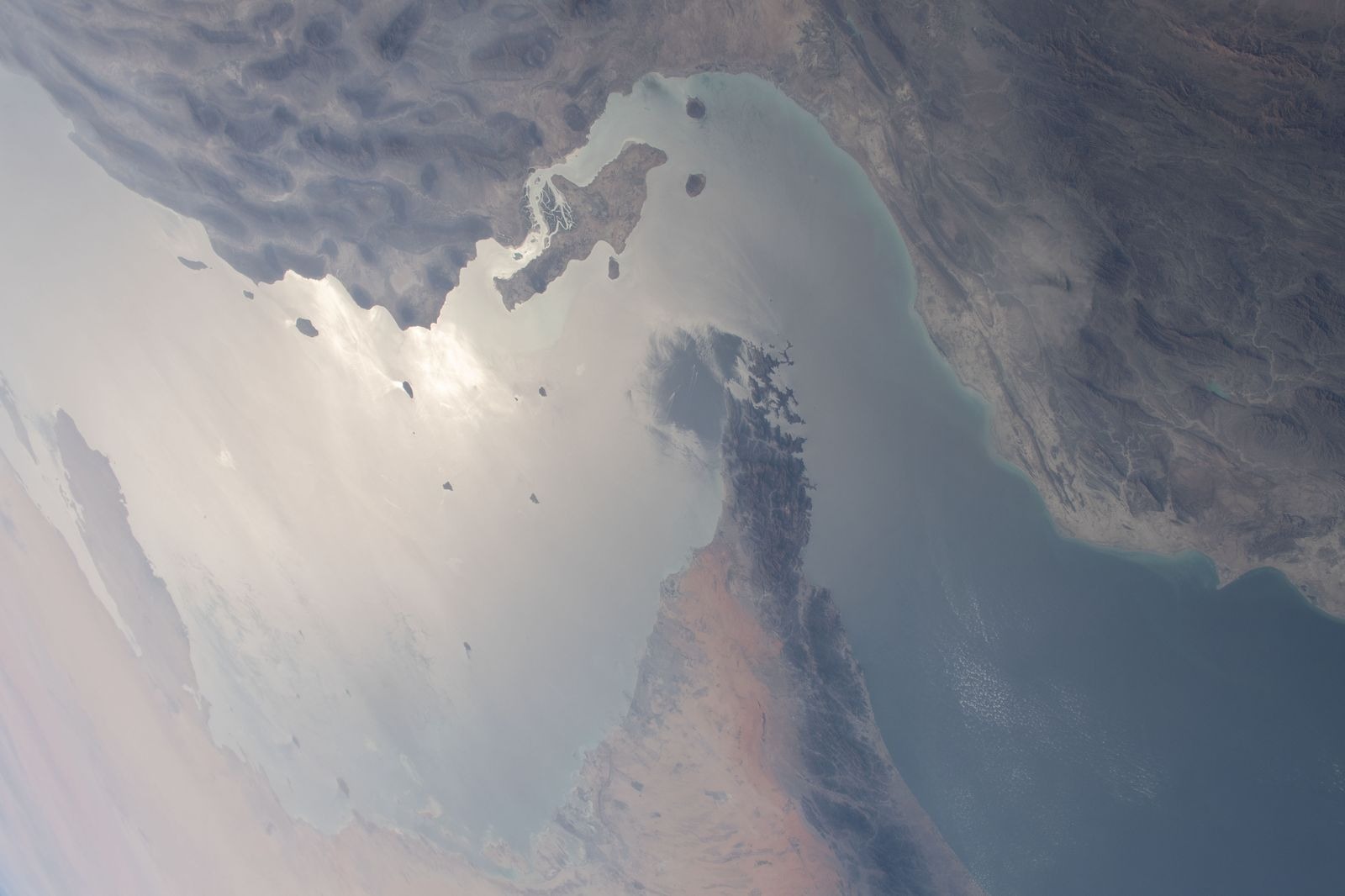
The energy dimension is never far. Any renewed US-Iranian exchange puts the Strait of Hormuz, one of the world’s most critical oil arteries, back in the crosshairs, and Iran’s oil lifelines to China would be among the first pressure points Washington could squeeze.
Who is Mehrdad Akhlaghi, and why does Washington care?
Washington has known Akhlaghi’s name for a long time. The US Treasury sanctioned him in 2008 for links to the missile programme and again under the first Trump administration in 2020; The United Nations listed him in 2007. For nearly two decades, American policy has treated him as part of the machinery it wants to dismantle. Now that machinery’s keeper runs the ministry.
That is precisely why the appointment matters more than the threat. Akhlaghi’s warning follows the standard grammar of deterrence: raise the adversary’s expected cost, assert confidence the attack will not come, leave the retaliation undefined. The substantive move is the portfolio: a production man, a sanctions veteran, a manager of the Aerospace Industries Organization before the DIO.
Read through the 5D lens, the appointment is structural, not theatrical. Geopolitically, it consolidates the war economy under a trusted insider eight months into an existential conflict. The threat to Washington is the press release; the rebuild is the policy.
The unanswered question, the one that decides whether this is bluster or prelude, is capability. Deterrence works when the threatened cost is credible. After eight months of war that opened with the decapitation of Iran’s military leadership, outside observers simply do not have a reliable public picture of what Iran’s missile forces can still do. Akhlaghi’s confidence (“they will most likely not dare”) is either knowledge or performance.
Second-order effects
First, the defence-industrial push will deepen Iran’s reliance on sanctions-evasion networks and on partners willing to supply machine tools, electronics and precursors; a shadow supply chain that Western enforcement will now target with renewed interest. Second, the appointment hardens the region’s threat perception: even as Tehran offers mediation between Saudi Arabia and the Houthis, a missile man at the defence ministry reads in Riyadh, Tel Aviv and Washington as preparation, not conciliation. Third, domestically, the 237-vote confirmation gives the war government a fresh stamp of parliamentary legitimacy at a moment when the Islamic Republic is governing without the supreme leader who anchored it for nearly four decades. Fourth, the rhetoric is now a tripwire: Tehran has narrowed its room to absorb a limited strike without responding.
What happens next if Washington strikes again?
In the first, deterrence holds: the war stays dormant, Akhlaghi rebuilds quietly, and the threat is remembered as the standard flourish of a confirmation day. In the second, a limited American strike, on a nuclear site, a missile facility, a proxy target, tests the promise, and the world learns what “enormous damage” meant: missile salvos, proxy activation, Hormuz harassment, or something less kinetic. In the third, miscalculation cascades, and the region gets the war the April ceasefire interrupted.
What to watch: American posture statements and force movements in the Gulf; any further reporting on the Pickaxe Mountain deliberations; IRGC exercises and missile tests; Iran’s parliamentary budget allocations for defence industry; and whether the “countermeasures” Akhlaghi mentioned acquire a visible form. The minister has set the terms; enormous damage for enormous folly, in his framing. The next move belongs to Washington.
What we agree on, and what remains open
Established
- Every outlet, AFP, Reuters, The Hindu, Xinhua/IRNA, PressTV, Al Jazeera’s war desk, agrees on the core facts: parliament confirmed Akhlaghi on 18 October 2026 with 237 of 277 votes.
- He warned of “enormous damage” if the US attacks.
- He succeeds Nasirzadeh, killed on 28 February alongside Khamenei. The quotes, the tally and the succession are reported identically across the West, East and Global South.
Contested
- The meaning of the appointment. Western coverage reads a sanctioned missile technocrat as continuity with Iran’s deterrence playbook; threaten costs, buy time, rebuild. Iranian state media reads the same biography as national resilience under fire: a “martyred” predecessor honoured by industrial mobilisation. One man’s sanctions record is another’s service record.
Still open
- The true state of Iran’s missile and defence-industrial base after eight months of war.
- What Tehran’s promised “countermeasures” to a US strike would look like.
- Whether Washington intends to strike again.
- Who anchors Iran’s clerical leadership after Khamenei’s death.
What to watch
Questions, answered
Mehrdad Akhlaghi, also rendered Akhlaghi Ketabchi or Akhlaqi, is a 42-year veteran of Iran’s defence ministry who has directed the Defence Industries Organisation, the state’s weapons manufacturer, since 2013, after earlier managing the Aerospace Industries Organization. He holds no military rank. The UN sanctioned him in 2007, the US Treasury in 2008 and 2020, and the EU and UK have followed, all over missile-programme links.
Minutes after parliament confirmed him on 18 October 2026, Akhlaghi told reporters the US would most likely not dare attack Iran again; but that if it did, America and its allies would suffer “enormous damage.” The quote comes from Agence France-Presse. Before the vote he had separately pledged a “surprising and extensive” response to any new “miscalculation” by the “American-Zionist enemy.”
The Islamic Consultative Assembly confirmed Akhlaghi as Minister of Defence and Armed Forces Logistics on 18 October 2026 with 237 votes in favour and 15 against, out of 277 votes cast. President Pezeshkian had nominated him on 5 October. The session was held remotely under Speaker Mohammad Baqer Qalibaf, after committee hearings and a personal defence of his programme by the nominee.
Aziz Nasirzadeh was killed on 28 February 2026 in US-Israeli strikes on a leadership compound in Tehran, on the first day of the war; alongside former supreme leader Ayatollah Ali Khamenei and senior military commanders. Brigadier General Majid Ebn-e-Reza served as acting defence minister in the interim and now becomes Akhlaghi’s deputy.