 MAGNA BUREAU
The Wire
The guns return to Kherson as the Ukraine war’s longest truce expires without an extension
A six-day localized ceasefire that let nearly 800 civilians leave Russian-occupied Oleshky ended on Sunday night after Moscow refused to extend it. Within hours, Russian drones were striking Kherson again; and neither side reported a single violation of the truce it broke.
Key points
- Six days, no violations: the localized Kherson ceasefire ran from 3 a.m. on 27 October to 10:59 p.m. Kyiv time on 1 November; the longest uninterrupted truce of the war. BBC, 2 Nov 2026
- Nearly 800 civilians evacuated: the pause enabled a rare joint operation to move besieged residents out of Russian-occupied Oleshky, across the Dnipro from Kherson. White House / Al Jazeera, 1 Nov 2026
- Russia refused to extend: Kyiv proposed prolonging the pause and Moscow declined, a senior Ukrainian figure told AFP on Sunday. AFP via Malay Mail, 2 Nov 2026
- Strikes resumed within hours: on 2 November a Russian drone hit a medical facility in central Kherson and another struck a car in the Korabelny district, wounding a 62-year-old woman and a 73-year-old man. The New Voice of Ukraine, 2 Nov 2026
- Cyber exchange at midnight: both countries’ emergency-alert apps were hit by apparent hacks within hours of the truce ending; false radiation warnings in Ukraine, a “massive cyberattack” claimed in Russia. AFP, 2 Nov 2026
ONE EVENT. THREE READINGS.
The Western wire frame is the truce-as-achievement: BBC, AFP and Ukraine’s New Voice emphasize the six violation-free days, the “biggest de-escalation since 2022,” and Moscow’s unexplained refusal.
The account foregrounds Ukrainian suffering, the clinic strike, the wounded civilians, the blackouts, and treats the refusal as the story’s moral hinge.
What this reading highlights: The account foregrounds Ukrainian suffering, the clinic strike, the wounded civilians, the blackouts, and treats the refusal as the story’s moral hinge.
Sources: BBC, The New Voice of Ukraine
The East information environment is thin but present.
Singapore’s Straits Times carried the AFP account of the expiry; searches of CNA, NHK, Kyodo and mainland-Chinese outlets found no independent East reporting.
What this reading highlights: That thinness is itself a datum: for Beijing and Tokyo, the Kherson pause is a humanitarian footnote, not a strategic signal.
Sources: The Straits Times
The South gave the story its fullest balance.
Al Jazeera carried both voices, Peskov’s positive assessment alongside the AFP-sourced refusal, and the mirror image of the strikes: Ukrainian drones hitting the Kstovo refinery and a missile-component factory in Rostov, beside Russia’s strikes on Ukrainian energy infrastructure.
What this reading highlights: Al Jazeera carried both voices, Peskov’s positive assessment alongside the AFP-sourced refusal, and the mirror image of the strikes: Ukrainian drones hitting the Kstovo refinery and a missile-component factory in Rostov, beside Russia’s strikes on Ukrainian energy infrastructure.
Sources: Al Jazeera, AFP via Malay Mail, National Herald India
Sources by lens: 2 West, 1 East, 3 Global South. See every source
THE POINT OF CONVERGENCE
A localized ceasefire in the Kherson region, covering the Russian-occupied town of Oleshky and its surroundings, took effect at 3 a.m. on 27 October 2026 and expired at 10:59 p.m. Kyiv time on 1 November.
WHAT REMAINS CONTESTED
Kyiv proposed extending the pause and Russia refused, according to a senior Ukrainian figure cited by AFP.
The story
What the first hours after the truce looked like
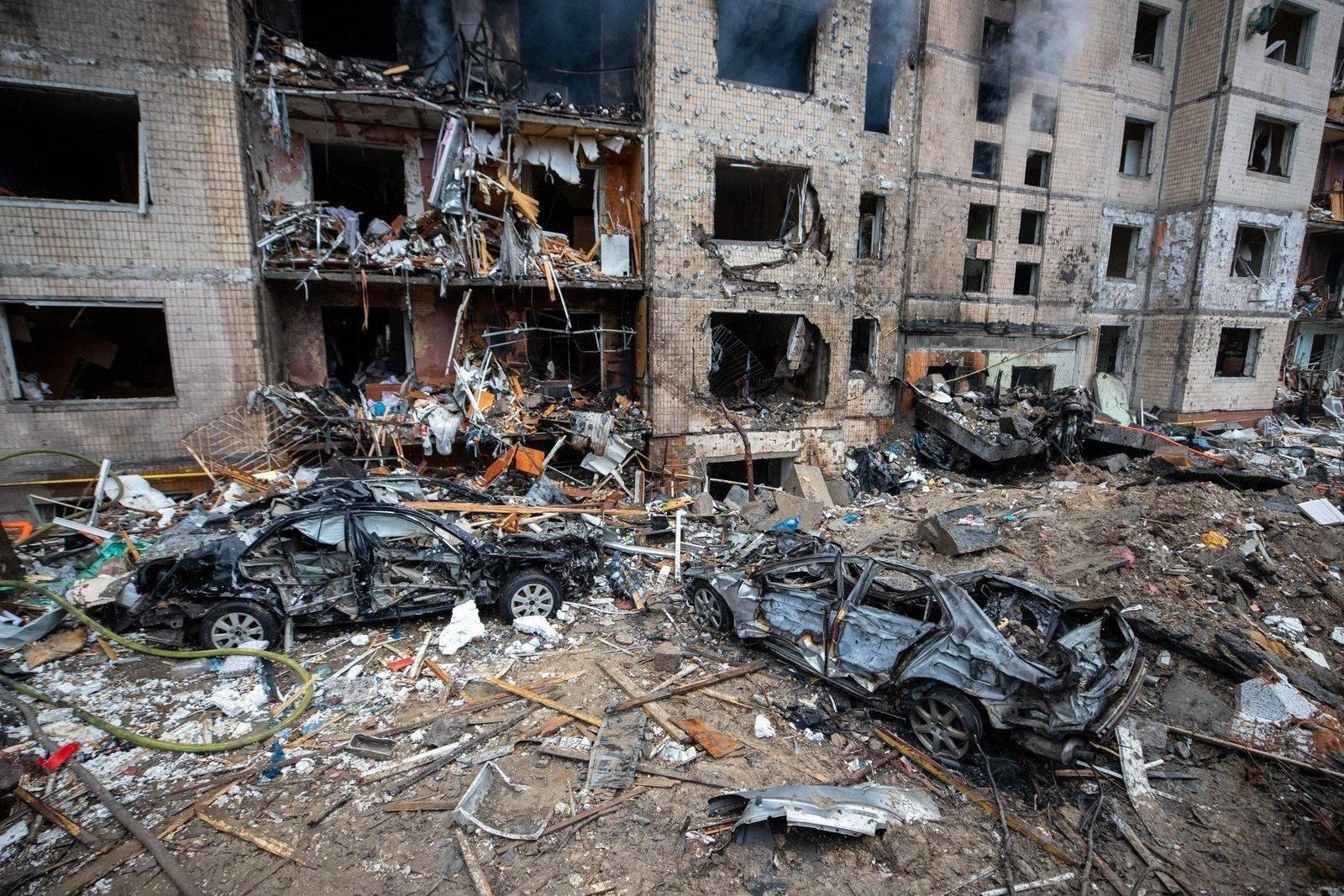
The quiet did not survive the night. At around 7:40 a.m. on Monday, 2 November, a Russian drone hit a medical facility in central Kherson, damaging rooms and shattering windows, according to Yaroslav Shanko, deputy head of the Kherson Oblast state administration. No casualties were reported at the clinic. Minutes later, a second drone struck a car in the Korabelny district, wounding a 62-year-old woman and a 73-year-old man; the first blows since the six-day truce expired at 10:59 p.m. Kyiv time on Sunday without a single reported violation. The night also opened a stranger front: Ukraine’s air force said its alert app had “probably been subjected to hostile interference” after false radiation warnings appeared over Kyiv, and Russia said its own emergency warnings app suffered a “massive cyberattack.” Both alert systems compromised within hours of each other; an exchange by keyboard as the exchange by drone resumed.
What the six quiet days established
The timeline is not in dispute. The pause ran from 3 a.m. on Tuesday, 27 October to 10:59 p.m. on Sunday, 1 November; six days in which, uniquely in nearly five years of full-scale war, neither side reported a violation. It was reached after mediation by U.S. First Lady Melania Trump, with the involvement of Pope Leo XIV, the White House said.
Oleshky held an estimated 2,000 civilians when the truce took hold, and the pause enabled a rare joint evacuation operation; the first of its kind in this sector. Ukraine’s military separately evacuated 167 people from threatened areas, including 22 children and 21 people with limited mobility. On the ending: “The ceasefire, which was in effect from October 27 to November 1, has ended,” said Dmytro Lubinets, Ukraine’s human rights commissioner. A senior Ukrainian figure told AFP that Kyiv had proposed an extension and Russia refused; with no reason given.
The night also opened a stranger front: Ukraine’s air force said its alert app had “probably been subjected to hostile interference” after false radiation warnings appeared over Kyiv.
Why did Moscow refuse to extend the truce?
Russia has offered no public explanation, and that silence is the file’s central unknown. Hypotheses circulate, none confirmed: that Moscow judged six days a sufficient humanitarian gesture; that the pause had served its own military purpose; or that an extension would signal weakness ahead of the energy-strike campaign against Ukrainian cities. Established is only the refusal, reported by Kyiv via AFP.
We do not know who hacked the two emergency-alert apps, nor whether the truce model will be repeated. Ukraine blamed Russia for the false radiation warnings; Russia named no culprit for its own attack. A Ukrainian officer warned the renewed fighting could be “worse than before,” with Russian forces having used the calm to amass troops and map positions with surveillance drones. Whether U.S.-mediated talks set for this month proceed is equally unresolved.
A proof of concept for humanitarian pauses; and of their limits
This truce matters because it was the longest of the war, and because it worked. One Ukrainian lawmaker called it the “biggest de-escalation since 2022.” For six days, in a pocket of the front where drone warfare has made daily life lethal, civilians could move, receive food, water and medicine, and choose evacuation. Nearly 800 people left Oleshky. The model, localized, time-bound, humanitarian, brokered from outside the two capitals; is now a precedent for every front-line pocket from the Dnipro to the Donbas.
The limits are equally instructive. The pause changed nothing in the wider trajectory: Russian strikes on Ukrainian energy infrastructure continued elsewhere throughout, leaving hundreds of thousands without power, and a separate drone strike killed three people, including a 13-year-old girl, in the Vinnytsia region. A humanitarian pause is not a peace process; it is a breathing space; and Moscow just showed how quickly the breath is exhaled.
How did both armies use the six quiet days?
Through the 5D lens, the truce is a compressed laboratory of the war’s mechanics. Geopolitically, it confirmed the Trump administration’s unconventional toolkit: a First-Lady-mediated, Vatican-assisted local deal, bypassing the frozen official track, produced the war’s longest pause. Economically, it unfolded against Zelenskyy’s offer to stop Ukrainian strikes on Russian oil refineries, as Donald Trump has demanded, if Washington supplies Patriot interceptors, framing the energy war as a bargaining asset.
Technologically, the pause exposed the drone war’s logic: Ukraine’s General Staff says Russian forces used the calm to rotate troops, reinforce positions and replenish ammunition. Kherson officials warned of Russian FPV, Mavic and Molniya drones resuming; the surveillance layer never paused, it merely observed. Historically, localized truces relieve civilians without altering the balance of force. The open question: will Kyiv propose the model again, and will Moscow accept the next one?
The week after: energy grids, refineries and the negotiation table
The second-order effects are already visible. Ukraine’s energy ministry reported fresh power outages on Sunday, including in Kyiv, after Russian strikes on energy infrastructure in four regions. Zelenskyy said Russia launched 433 drones overnight, 371 destroyed or suppressed; and Moscow is exploiting Ukraine’s shortage of ballistic missile interceptors.
Ukraine struck back: a missile-fuel producer in Russia’s Rostov region was hit, and a fire broke out at the Kstovo oil refinery in the Nizhny Novgorod region after Ukrainian drone attacks. Zelenskyy’s offer, no more refinery strikes if Washington provides Patriots, now sits on the table as the truce’s dividend or its bargaining chip. And the cyber dimension: two emergency-alert systems compromised within hours, on both sides. The next pause, if there is one, will need a cyber ceasefire clause; or it will not hold in the one domain neither side’s guns control.
Where the next test of the pause model falls
U.S.-mediated talks between Russia and Ukraine are set to resume this month, and the Kherson experiment will be in the room; proof that local pauses can work, and proof that Moscow will walk away from them. Whether the talks proceed at all, after the return to combat and the mutual cyberattacks, is the first unknown to resolve.
In Kherson, the immediate future is what it was before 27 October, only sharper. Governor Prokudin’s warning stands: residents must “respond immediately to warnings about Russian attacks,” and officials expect shelling to intensify. The strategic question is whether the pause model travels, it requires what Moscow withheld this time: an extension. Until a second pause is agreed, the Kherson truce stands as the war’s most hopeful week, and its most instructive failure.
What we agree on, and what remains open
Established
- A localized ceasefire in the Kherson region, covering the Russian-occupied town of Oleshky and its surroundings, took effect at 3 a.m. on 27 October 2026 and expired at 10:59 p.m. Kyiv time on 1 November.
- Neither side reported a violation.
- The pause was arranged with the mediation of U.S. First Lady Melania Trump and the involvement of Pope Leo XIV.
- It enabled the evacuation of hundreds of civilians from Oleshky; nearly 800 according to the White House, 167 from the most threatened areas according to Ukraine’s General Staff.
Contested
- Kyiv proposed extending the pause and Russia refused, according to a senior Ukrainian figure cited by AFP.
- Ukraine’s human rights commissioner Dmytro Lubinets confirmed the truce had ended, calling it “an important step in our joint humanitarian efforts” with Russia.
- Kremlin spokesman Dmitry Peskov, quoted by Russian news agencies, praised the operation’s conduct. On Monday morning Russian drones struck central Kherson, a medical facility hit, a car struck in the Korabelny district, two civilians wounded, according to the Kherson city military administration.
Still open
- We disagree on the cyber incidents, and we don’t know who did them. Ukraine’s air force said its air-alert app was hacked Sunday evening, spreading false radiation warnings.
- Russia said its emergency warnings app suffered a “massive cyberattack” on Monday. Ukraine’s strategic communications centre blamed Russia for the Ukrainian hack.
- Russia has named no culprit for its own. No independent attribution exists for either incident.
What to watch
Questions, answered
The localized ceasefire ran from 3 a.m. on Tuesday, 27 October to 10:59 p.m. Kyiv time on Sunday, 1 November 2026; six days, the longest uninterrupted truce of the war. It covered the Russian-occupied town of Oleshky and the surrounding Kherson region. Neither side reported a violation, though fighting continued elsewhere in Ukraine and Russia throughout.
The White House said the pause was reached after mediation by U.S. First Lady Melania Trump, with the involvement of Pope Leo XIV. After the truce expired, the first lady wrote on X that it had been “a success, delivering critical aid to the region and enabling the evacuation of nearly 800 people.” It is the war’s first major pause arranged through this unconventional diplomatic channel.
Around 2,000 civilians were estimated to be in Oleshky when the truce took hold. The White House said nearly 800 people were evacuated in a rare joint operation that concluded on Saturday, 31 October. Ukraine’s military separately reported evacuating 167 more people from threatened areas of the southern Kherson region, including 22 children and 21 people with limited mobility.
Russia refused Kyiv’s proposal to extend the pause, a senior Ukrainian figure told AFP. Within hours of the 10:59 p.m. expiry, Russian drones struck Kherson: one hit a medical facility in the city centre, another struck a car in the Korabelny district, wounding a 62-year-old woman and a 73-year-old man. Both countries’ emergency-alert apps were also hit by apparent cyberattacks the same night.