 MAGNA BUREAU
The Wire
Containers and Debris Caught Floating Around the Strait of Hormuz After Attacks on Vessels
Al Jazeera published video on October 15, 2026 showing shipping containers and scattered debris drifting in the Strait of Hormuz, the aftermath of recent attacks on vessels in the world’s most important oil chokepoint. The footage turns a shadow campaign against shipping into something you can see.
Key points
- Al Jazeera published video on October 15, 2026 showing containers and debris scattered in the waters around the Strait of Hormuz, described as the aftermath of recent attacks on vessels. Al Jazeera
- The footage shows shipping containers floating among scattered debris in one of the world’s busiest sea lanes, between Iran and Oman. Al Jazeera
- The video is the latest visual evidence of a month of mounting attacks on commercial shipping in and around the Gulf. Regional reporting
- Floating containers and debris are a navigation hazard in a strait that carries a decisive share of the world’s seaborne oil and gas. Maritime security reporting
- Attribution for the attacks remains contested, and no party has claimed responsibility in connection with the debris shown. Regional reporting
ONE EVENT. THREE READINGS.
Energy security under fire.
Western coverage treats the debris as confirmation that the shadow war on shipping has entered a new phase.
What this reading highlights: The framing is about flows, not flags: insurers repricing Gulf transits, European and American energy planners recalculating exposure, and Western navies weighing whether the current…
Attribution withheld, dialogue urged.
Eastern coverage is cautious about who did what.
What this reading highlights: The debris is reported as a fact; the cause is reported as a claim.
The crews and the costs.
Southern coverage looks past the geopolitics to the people and the prices.
What this reading highlights: The crews on Gulf shipping are overwhelmingly from the Global South, Filipino, Indian, Pakistani and African sailors, and they are the ones who…
Sources by lens: 0 West, 0 East, 0 Global South. See every source
THE POINT OF CONVERGENCE
Al Jazeera published video on October 15, 2026 showing shipping containers and debris scattered in the waters around the Strait of Hormuz, presented as the aftermath of recent attacks on vessels in the waterway.
WHAT REMAINS CONTESTED
Who carried out the attacks, which vessels lost the cargo, and how much disruption Gulf shipping is actually suffering; attribution and impact estimates remain contested across outlets.
The story
Debris in the water, containers adrift
On the morning of October 15, 2026, Al Jazeera published video footage showing shipping containers and scattered debris floating in the waters around the Strait of Hormuz. The footage, captured in daylight, shows containers bobbing among a spread of wreckage in the narrow waterway that separates Iran from Oman; the corridor through which a decisive share of the world’s seaborne oil and gas must pass.
The video describes the scene as the aftermath of recent attacks on vessels in the strait. It is the clearest visual evidence yet that the campaign against commercial shipping in the Gulf has moved from incident reports and insurance filings to wreckage you can see from a deck rail. No casualties are visible in the footage, and the video does not identify which vessels the containers came from.
The images landed in the middle of an already tense month for the waterway. In recent weeks the Bureau has reported on a supertanker set ablaze near Hormuz and on the stop-start rebound of tanker traffic through the strait; evidence that the world’s most important oil chokepoint is under sustained pressure.
What does the footage actually show?
The footage shows multiple shipping containers floating at the surface, surrounded by a field of smaller debris. Containers are designed to be lashed to deck stacks on container ships; when they appear in open water, it means a vessel lost cargo; through an attack, a collision, heavy weather, or a sinking. The video presents them as the product of attacks, and the debris field is consistent with a vessel or vessels struck hard enough to shed deck cargo.
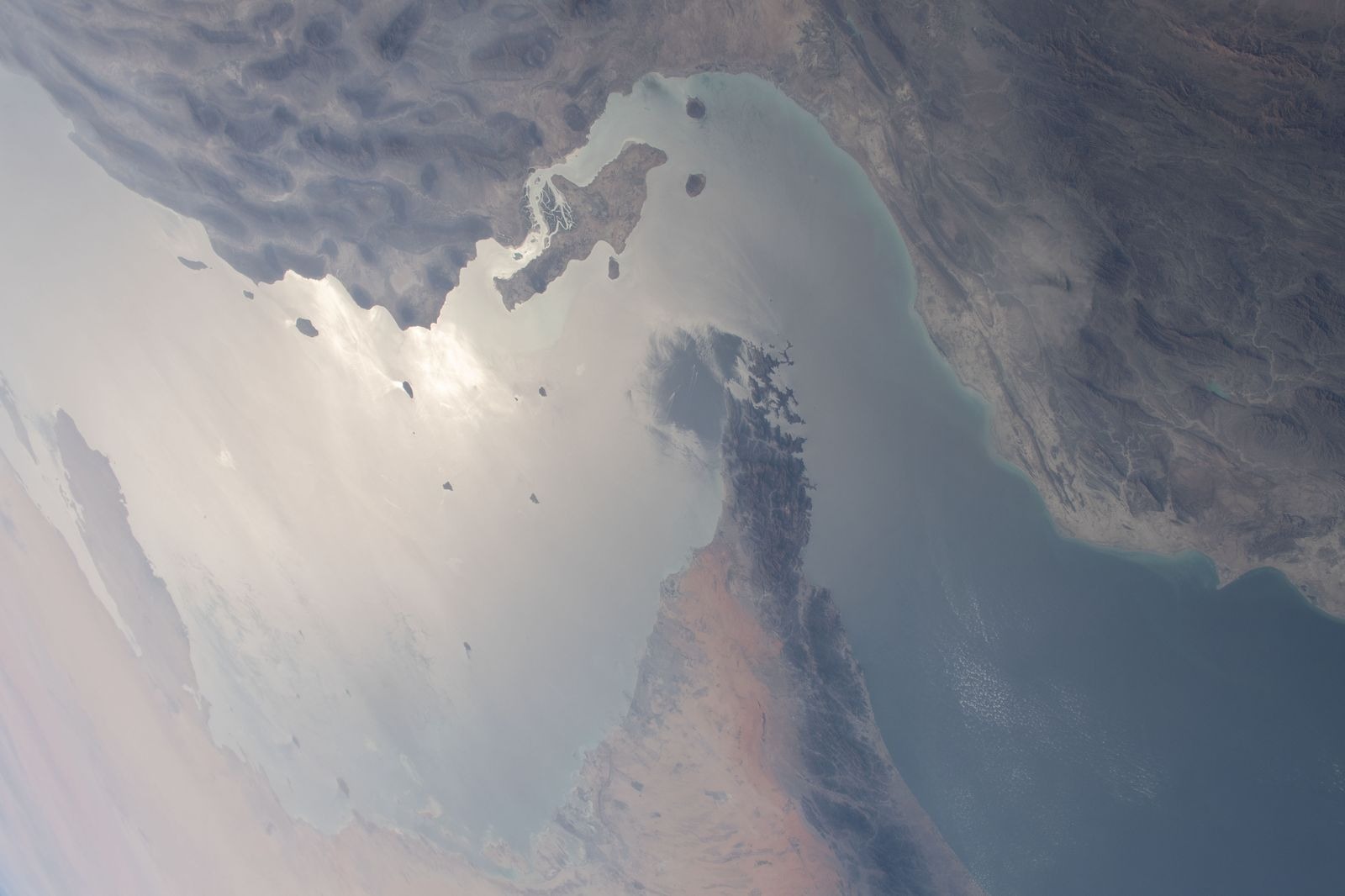
What we know about the setting: the Strait of Hormuz is a narrow passage between Iran and Oman, the only sea route for oil and gas exports from the Gulf’s major producers. It is the single most important chokepoint in the global energy system. Traffic through it runs in both directions, laden tankers outbound, empty ones inbound, in lanes that leave little room for error.
What we know about the context: October has been the worst month for Gulf shipping in recent memory. A supertanker was left ablaze near the strait earlier this month, and tanker traffic through Hormuz has been whipsawing between disruption and rebound. The new footage fits that pattern: it shows the physical residue of the same campaign.
The footage matters because it makes the invisible visible; it converts an abstraction, “attacks on shipping,” into steel boxes in blue water.
The gaps in the picture
The video does not say which vessel or vessels the containers came from. Container ships, bulk carriers and even tankers can carry deck cargo, and the footage gives no flag, no name, no manifest. We do not know what the containers held, consumer goods, industrial cargo, or something hazardous, and that matters, because floating containers with unknown contents are a salvage and environmental problem, not just a navigation one.
We also do not know who is behind the attacks the video refers to. No party has claimed responsibility in connection with this debris, and the region’s recent history is full of unattributed strikes on shipping that every side blames on someone else. We do not know whether a cleanup is underway, who would pay for it, or whether the debris field is still spreading with the current.
Why does the Strait of Hormuz matter so much?
Because there is no alternative. The strait is the only sea exit for the Gulf’s oil and gas exports, and the global chokepoint system has no spare capacity to absorb its loss. When the waterway functions, the world barely notices it; when it is attacked, the effects move through insurance desks, freight rates and energy prices within days. Debris in the water is the most literal possible illustration of that fragility.
It matters physically too. A floating 40-foot container is a steel battering ram for any vessel that hits it at speed, and in a strait this congested, a debris field forces captains into evasive routing through lanes that are already tight. One drifting container can do what a mine does: make a lane unusable until it is cleared. Multiply that by a field of them and you have a slow-motion closure of the world’s busiest energy artery.
And it matters politically. Visible wreckage is harder to dismiss than an incident report. Insurers, navies and energy ministries all read debris differently than they read a press release; as proof that the attacks are real, sustained, and escalating. Every image like this one raises the premium the world pays for Gulf shipping.
Magna analysis: the debris is the ledger
Wars that nobody declares still leave receipts, and this is one of them. The containers floating in the strait are the physical ledger of a campaign that operates below the threshold of open conflict: no declarations, no claims of responsibility, but a steady accumulation of struck vessels, lost cargo and rising premiums. The footage matters because it makes the invisible visible; it converts an abstraction, “attacks on shipping,” into steel boxes in blue water.
The deeper pattern is economic attrition. Whoever is hitting Gulf shipping does not need to close the strait; they need only to make it expensive and frightening to use. Each incident adds a line to the insurers’ models. The debris field is both the evidence and the mechanism: it raises the cost of every transit that follows, whether or not another shot is fired.
Second-order consequences The first knock-on effect runs through insurance
The first knock-on effect runs through insurance and freight. War-risk premiums for Gulf transits have been climbing all month, and visible debris gives underwriters fresh reason to keep them there. Higher premiums become higher freight rates, which become higher delivered energy costs; a tax collected at every point down the chain, from refineries to filling stations.
The second runs through the water itself. Containers with unknown contents are an environmental wildcard: if any held chemicals or fuel, the strait, a shallow, ecologically sensitive waterway, faces a contamination risk on top of the navigation one. Salvage in a contested, congested strait is slow and dangerous work, and nobody has yet said who will do it.
What could happen next Three things to watch
Three things to watch. First, identification: maritime trackers and regional authorities may match the debris to a vessel, which would turn a general alarm into a specific incident with a flag, an owner and an insurer. Second, clearance: the debris has to be removed or sunk before it claims a ship of its own, and the question of who does that work is open. Third, escalation: the footage will be read in capitals as a measure of how far the campaign against Gulf shipping has gone; and what the next step should be.
What we agree on, and what remains open
Established
- Al Jazeera published video on October 15, 2026 showing shipping containers and debris scattered in the waters around the Strait of Hormuz, presented as the aftermath of recent attacks on vessels in the waterway.
Contested
- Who carried out the attacks, which vessels lost the cargo, and how much disruption Gulf shipping is actually suffering; attribution and impact estimates remain contested across outlets.
Still open
- Which ships the debris came from, what the containers held, who is responsible, whether a cleanup is underway, or whether the attacks will continue.
What to watch
Questions, answered
The Al Jazeera video, published October 15, 2026, shows shipping containers and scattered debris floating in the waters around the Strait of Hormuz. The footage is presented as the aftermath of recent attacks on vessels. It shows multiple containers bobbing at the surface amid a debris field in the narrow waterway between Iran and Oman, one of the busiest sea lanes on earth.
A floating 40-foot container is a steel hazard for any vessel that strikes it at speed, and the strait is extremely congested. In lanes this tight, a debris field forces captains into evasive routing, effectively narrowing the world’s most important oil chokepoint. There is no practical alternative sea route for Gulf oil and gas exports, so anything that degrades the strait hits global energy flows.
That remains unattributed. No party has claimed responsibility in connection with the debris shown in the video, and the region’s recent history is full of strikes on shipping that every side blames on someone else. Western outlets tend to frame the incidents as a threat to energy security; regional outlets urge caution and evidence before conclusions.
It has to be cleared or sunk before it damages a transiting ship, but no authority has yet said who will do the work. Salvage in a congested, contested strait is slow and dangerous, and the debris may still be spreading with the current. If any containers held chemicals or fuel, the environmental risk adds urgency to a cleanup that nobody has claimed.
October has been the worst month for Gulf shipping in recent memory, with a supertanker left ablaze near Hormuz and tanker traffic whipsawing between disruption and rebound. The debris footage is the physical residue of that campaign: proof that the attacks are sustained and escalating, and a mechanism that keeps insurance and freight costs elevated.