 MAGNA BUREAU
The Wire
Brazil’s Amazon deforestation falls to record low as decisive run-off looms
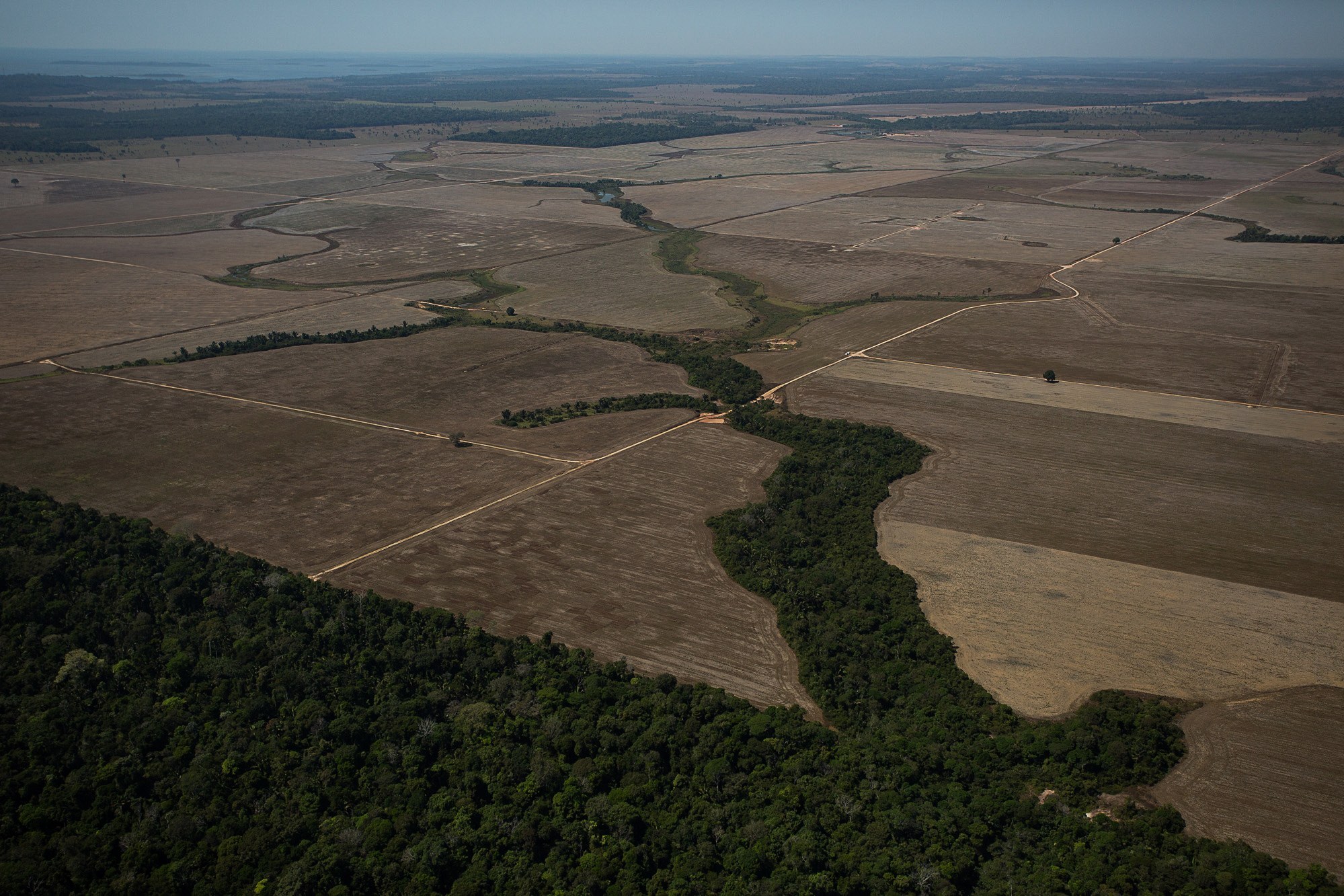
Satellite data shows forest clearance dropped 41.8% to 3,335 square kilometres; the lowest since records began in 1988. President Lula is turning the greenest number of his presidency into an election argument; his rival’s camp sees a rollback waiting to happen.
Key points
- Brazil’s government announced on 16 October 2026 that Amazon deforestation fell 41.8% in the year to July 2026, to 3,335 sq km; the lowest since Prodes records began in 1988. <a href=”https://www.bbc.co.uk/news/articles/cqe8rzg6zl00o” target=”_blank” rel=”noopener”>BBC</a> (16 Oct 2026)
- The Cerrado savanna recorded its lowest annual clearance since 2001, down 23.8% to about 5,516 sq km. <a href=”https://worldrightnowlive.com/story/brazilian-amazon-deforestation-falls-to-lowest-on-record-as-pivotal-vo” target=”_blank” rel=”noopener”>The Guardian</a> (16 Oct 2026)
- Pará (33.9%), Mato Grosso (25.5%) and Amazonas (15.7%) led the totals but each fell more than 45% year-on-year; Roraima was the only state where deforestation rose (+0.4%). <a href=”https://worldrightnowlive.com/story/brazilian-amazon-deforestation-falls-to-lowest-on-record-as-pivotal-vo” target=”_blank” rel=”noopener”>The Guardian</a> (16 Oct 2026)
- Environment Minister Joao Paulo Capobianco called the drop “absolutely stratospheric”; Lula reiterated the goal of zero illegal deforestation by 2030. <a href=”https://www.deutschetageszeitung.de/en/Nature/931282-deforestation-in-brazil-amazon-hits-nearly-four-decade-low.html” target=”_blank” rel=”noopener”>AFP</a> (16 Oct 2026)
- Between 2023 and 2026, Ibama carried out 76,095 enforcement actions and issued 25,101 infraction notices; the Amazon Fund approved R$147.6m for INPE’s SIM-Biomas and R$825.7m for Ibama’s FortFisc. <a href=”https://particle.news/story/brazil-records-lowest-annual-deforestation-in-amazon-and-cerrado” target=”_blank” rel=”noopener”>Particle News</a> (17 Oct 2026)
ONE EVENT. THREE READINGS.
From Western capitals and climate desks, the figures read as vindication: enforcement works, and Lula’s bet on state capacity, satellites, fines, embargoes, has delivered the steepest drop in the 38-year series.
The framing is explicitly electoral: a president who trailed after the first round despite an impressive record in slowing the destruction of the Amazon now has hard data to argue that green governance is competent governance.
What this reading highlights: The open Western question is durability; whether institutions built in four years can survive a change of government, and whether US–Brazil relations under Trump…
Sources: BBC, The Guardian, AFP, Particle News
From the development-first perspective, the same numbers read differently: a state choosing which parts of its own territory may be economically used, with the costs borne by frontier states whose voters backed the opposition.
The agribusiness argument, that Brazil feeds the world and should not be lectured on land use by countries that cleared their own forests centuries ago, did not disappear with the Prodes print.
What this reading highlights: For commodity strategists in Asia and the Gulf, the practical question is supply: tighter enforcement in Pará and Mato Grosso is a variable in global…
And from inside the forest, the record is neither miracle nor mirage but the product of grinding enforcement work; and its limits are local.
The Cerrado, long treated as the zone where soy and beef producers could clear what the Amazon rules forbade, has now posted its own record low; whether that holds as the Matopiba frontier advances is the real test.
What this reading highlights: Indigenous territories, where demarcation battles continue, remain the most effective conservation units in the basin.
Sources by lens: 4 West, 0 East, 0 Global South. See every source
THE POINT OF CONVERGENCE
Every outlet converges on the headline numbers; Amazon clearance fell 41.8% to 3,335 sq km in the year to July 2026, the lowest since Prodes records began in 1988, while the Cerrado fell 23.8% to its lowest since 2001.
WHAT REMAINS CONTESTED
Coverage splits on what the numbers prove. Lula’s camp presents them as proof that enforcement works.
The story
Brazil’s government said on Friday 16 October that deforestation in the
Brazil’s government said on Friday 16 October that deforestation in the country’s Amazon region has fallen to the lowest level since measurements began in 1988. Data from the Prodes satellite monitoring series, compiled by the National Institute for Space Research (INPE), show forest clearance dropped by 41.8% in the year to July 2026, to 3,335 square kilometres; beating the previous record low by 1,236 square kilometres, an area roughly the size of Rio de Janeiro.
Environment Minister Joao Paulo Capobianco announced the figures at a press conference in Brasília, calling the decline “absolutely stratospheric” and “like a dream”. The neighbouring Cerrado savanna also registered its lowest annual clearance since 2001, falling 23.8% to about 5,516 square kilometres.
The timing is political dynamite. Nine days before the 25 October presidential run-off, incumbent Luiz Inácio Lula da Silva is turning the greenest statistic of his presidency into a campaign argument. He faces Senator Flávio Bolsonaro, the son of former president Jair Bolsonaro, in a contest polls describe as neck-and-neck; and in which the future of the rainforest has become a central fault line. The first round earlier this month delivered a shock result that put Lula on the defensive; the deforestation numbers are his counter-punch.
Why did the numbers move now?
The Prodes series, regarded as the most accurate measure of Amazon clearance, tracks the August-to-July cycle. The 2025–26 cycle shows clearance 71.2% below the level recorded in 2022, the year before Lula’s administration began. The decline is attributed to tougher enforcement: between 2023 and 2026, the environmental agency Ibama carried out 76,095 enforcement actions and issued 25,101 infraction notices, alongside large-scale embargoes of illegally cleared land.
The geography of the fall is broad. Pará accounted for 33.9% of all Amazon deforestation in the cycle, Mato Grosso 25.5% and Amazonas 15.7%; yet even in those states, clearance dropped by more than 45% on the previous year. The only state where deforestation increased was Roraima, up 0.4%, a Bolsonaro stronghold.
Money is following the satellites. The Amazon Fund has approved R$147.6 million for INPE’s SIM-Biomas project, integrating the Prodes and Deter systems, applying artificial intelligence to detection, and extending daily deforestation alerts to every Brazilian biome, plus R$825.7 million for Ibama’s FortFisc programme to expand remote surveillance and aerial and field capacity. “Our goal is to achieve zero illegal deforestation by 2030,” Lula wrote on X on Friday.
Environment Minister Joao Paulo Capobianco announced the figures at a press conference in Brasília, calling the decline “absolutely stratospheric” and “like a dream”.
Whether the curve survives the election
Whether the curve survives the election. Flávio Bolsonaro is expected to continue his father’s policies if he wins, though he has pledged to fight organised crime in the Amazon; a framing that could mean enforcement against illegal mining, or a pretext to reshape the agencies that produced these numbers. INPE and Ibama budgets under a new government are the variable to watch.
Whether Roraima’s 0.4% uptick is noise or the opening of a new frontier. Whether the Cerrado’s record can hold as the soy frontier advances through Matopiba; the agricultural pressure on Brazil’s interior has not gone away, whatever the satellite series says. And whether the unusual spike in fires in Amazonas state, currently under investigation, will complicate the enforcement story.
How does the Amazon fit into the global climate fight?
Brazil holds about 60% of the Amazon, the world’s largest rainforest and a crucial buffer in the fight against climate change. In a healthy state, tropical forests absorb vast quantities of carbon dioxide; under decades of deliberate clearance for agriculture and logging, compounded by a warming climate that creates conditions for wildfires, that buffer weakens. Brazil’s factbook profile tracks the country’s environmental and economic indicators in one place.
The numbers also reset the diplomatic board. Brazil hosted the COP30 climate summit last November; arriving at the next round of climate finance talks with a record-low deforestation print gives Brasília leverage; with Western donors, with green bond markets, and with Washington, where the relationship with the United States under Donald Trump is part of the election backdrop. A reversal after 25 October would be read globally as a signal about whether enforcement-led conservation can outlast a single presidency.
The 5D read: geopolitically, the Prodes release is an election weapon
The 5D read: geopolitically, the Prodes release is an election weapon timed for the final week; data as campaign infrastructure. Economically, it is a demonstration that enforcement has a return on investment: R$973 million in new surveillance funding against billions in avoided carbon and reputational value. Demographically, the map shows the pressure moving: the big three states fell hard, the outlier is the opposition stronghold. Historically, the 71.2% fall since 2022 closes the book on the Bolsonaro-era surge, when the Amazon lost nearly 60% more forest than in the previous four years. Structurally, it is a story about state capacity, the unglamorous machinery of satellites, field agents and embargoes, which is precisely why the final polls before the run-off matter as much as the satellite data: machinery needs a government willing to run it.
First, carbon and capital: a record-low print strengthens Brazil’s hand in
First, carbon and capital: a record-low print strengthens Brazil’s hand in climate finance and green-bond markets, where deforestation curves are priced. Second, commodities: sustained enforcement in the arc of deforestation tightens the long-run supply outlook for soy and beef from the Legal Amazon; traders will watch the Cerrado number as closely as the Amazon one. Third, institutions: SIM-Biomas and FortFisc lock in a surveillance architecture that a hostile government would have to actively dismantle, raising the political cost of reversal. Fourth, the fire variable: the probe into the Amazonas fire spike could either validate the enforcement story or punch holes in it. Fifth, the demonstration effect: in an election fought on living costs as much as the forest, Lula is betting that competence on the environment reads as competence, full stop.
What happens after 25 October?
The run-off decides whether the curve continues or breaks. A Lula victory would likely entrench the enforcement regime and unlock the next tranche of Amazon Fund disbursements; a Flávio Bolsonaro win would test every one of these numbers within months, starting with the Ibama and INPE budgets. Either way, the monthly Deter alerts will keep publishing; the satellites do not take election leave. The next Prodes cycle, the SIM-Biomas rollout and the FortFisc deployments are the milestones to watch. The forest, as ever, will keep its own accounts.
What we agree on, and what remains open
Established
- Every outlet converges on the headline numbers; Amazon clearance fell 41.8% to 3,335 sq km in the year to July 2026, the lowest since Prodes records began in 1988, while the Cerrado fell 23.8% to its lowest since 2001.
Contested
- Coverage splits on what the numbers prove. Lula’s camp presents them as proof that enforcement works.
- Sceptics and the opposition warn the decline is fragile, credit cyclical factors, and argue conservation constrains development in frontier states.
Still open
- Whether the trend survives the 25 October run-off, what happens to the Ibama and INPE budgets under a new government, or whether Roraima’s 0.4% uptick is an outlier or the opening of a new frontier.
What to watch
Questions, answered
On 16 October 2026, Environment Minister Joao Paulo Capobianco announced Prodes satellite data showing Amazon deforestation fell 41.8% in the year to July 2026, to 3,335 square kilometres; the lowest since records began in 1988. The Cerrado savanna fell 23.8% to about 5,516 square kilometres, its lowest since 2001. The figures were released nine days before the presidential run-off.
President Lula faces Senator Flávio Bolsonaro, son of Jair Bolsonaro, under whom Amazon clearance surged, in the run-off on 25 October. Polls describe a neck-and-neck race. Lula is using the record-low figures as proof his enforcement-led approach works, while a Bolsonaro victory would likely mean looser environmental controls. The rainforest’s future is effectively on the ballot.
Prodes is the satellite monitoring programme run by Brazil’s National Institute for Space Research (INPE), regarded as the most accurate measure of Amazon deforestation. It tracks clearance over the August-to-July cycle. Because the series runs back to 1988, the new 3,335 sq km print is directly comparable across four decades; which is why beating the previous record low by 1,236 sq km is a 38-year milestone.
The government credits enforcement. Between 2023 and 2026, the environmental agency Ibama carried out 76,095 field actions and issued 25,101 infraction notices, with large-scale embargoes on illegally cleared land. The Amazon Fund has now approved R$147.6 million to upgrade INPE’s satellite detection with AI and daily alerts, plus R$825.7 million to expand Ibama’s surveillance capacity.